























Sponsored content: Jamie Melling, chief executive at Smartnumbers, discusses how the data behind contact centre calls is emerging as a powerful, but underused, tool in the fight against insurance fraud
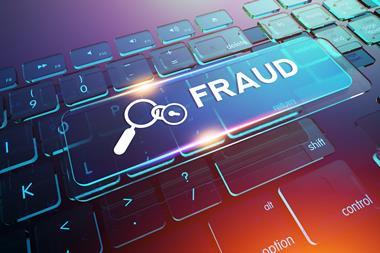
Insurance fraud is a moving target. Fraudsters are strategic about which channel they use at each stage, moving deliberately between web, mobile and contact centre to take whichever route offers the least resistance.

A policy application using a synthetic identity might start online and end with a phone call. A bogus claim might be registered by phone and completed digitally. Viewed in isolation, however, none of it looks out of the ordinary.
But in our experience, the contact centre data repays closer attention. Buried in the calls there are often tell-tale signs that something is amiss.
The number behind the call
Fraudsters interact with contact centres more than many insurers realise, even when the fraud itself completes elsewhere.
They call to gather policyholder information, manipulate agents into making policy changes or to initiate payments. Each of those calls leaves a trace and the most valuable trace of all is the phone number.
Phone numbers are remarkably persistent. Identities change, payment details change, devices change, but our data shows that fraudsters frequently reuse the same numbers.
When insurers treat phone numbers as risk identifiers, patterns emerge that are otherwise impossible to see – the same number linked to multiple policies, multiple identities and multiple claims.
Unfortunately, the telephony channel has historically lacked the real-time verification capability that digital channels now take for granted.
Fraudsters exploit this gap by withholding or spoofing their caller ID, knowing this is often enough to bypass the controls most contact centres have in place. But when the true number behind an incoming call can be identified and instantly cross-checked against denylists and other fraud intelligence, that advantage disappears.
Shared intelligence
The value of telephony intelligence grows significantly when it extends beyond a single organisation. We see numbers linked to banking fraud investigations later surface in insurance policy applications or claims activity. It is only through shared intelligence that those connections become visible.
A cross-sector view like this helps with tracking ghost broking and synthetic identity fraud, two of the fastest-growing threats in insurance.
Here, fraudsters set up multiple bogus policies across several insurers or use synthetic identities to build up fictitious personas that may be used across insurance, banking and beyond.
In both cases, the phone number is often the thread that connects activity across policies and companies that would otherwise appear unrelated.
The key to building a long-term defence against fraud is to integrate telephony intelligence into wider operations, connecting it with case management, claims systems and investigation workflows, as our customers do.
In this way, their fraud teams follow activity across policies, business lines and organisations, identify repeat actors and intervene earlier.
The contact centre is sometimes seen as a gap in fraud defences. Based on the data it generates it could be at the heart of fraud prevention.
- To find out more about Smartnumbers, click here