



























’For maximum impact we need to raise the profile of our sector nationally, but having a stronger voice locally would certainly give firms more opportunities,’ says head of people proposition
When Andy Burnham became the UK’s new prime minister in July 2026, he pledged to devolve more power and responsibility to the regions as part of his mission for “good growth in every postcode”.

Burnham is a supporter of devolution and made clear that he wanted to change the Westminster-centric system of government to make more people feel connected to decision-making.
The Labour leader said: “When I say we need good growth in every postcode, I mean every postcode across the whole of the UK. Every place and every person matters.
“I’m not focused on point scoring or discussing constitutional changes like referendums, I want practical measures to help people live well and bring back hope.”
Businesses are a key part of these plans, with Burnham keen on a fresh partnership between government and business built around a shared ambition to drive investment, create jobs and grow the economy.
And with insurance firms usually firmly involved in the communities they are based in, it follows that they should play a key role in shaping local plans.
Huw Evans, head of insurance at KPMG UK, said: “If the new set of ministers continue down the route of how to devolve government, build more active communities and decision-making outside of London, I would argue the insurance industry has a lot to contribute to that because we are a major employer outside of London and the south east.
“We are major centres of operations and employment across the UK, in big cities and in medium-sized towns, so I hope the insurance industry will lean into that conversation and play an active role.”
Improving hiring and apprenticeships
This raises a key question – could the insurance industry having a stronger, more local presence address the talent issues it is facing?
Read: Talent attraction versus job opportunities – Where is the biggest people pinch point?
Read: Soft market cycle driven ‘horrible’ hiring hiatus of young talent – Caroline Wagstaff
Explore more talent related content here, or discover more news analysis here
The first issue is that the industry is not hiring enough young people and, in turn, risks deepening its ongoing talent crisis.
According to the Financial Services Skills Commission’s Annual Skills Report 2026, published in May this year, the total number of employees across financial services “declined by 5%, driven by larger firms in banking and insurance” over the course of 2025.
And during Insurance Times’ Destination Insurance event in January 2026, Caroline Wagstaff, chief executive at the London Market Group, said hiring data showed that while the London market employs around 65,000 people, it only hires roughly 1,200 young people each year.
“What we are seeing is not enough hiring,” she said.
Crescens George, chief executive at Wiser Academy, explained that if insurance firms get a seat at the table under devolution plans, “it is an opportunity to make larger contributions in shaping the skills and talent agenda for local communities – and in turn benefit from it”.
He added: “If [insurance firms] were given a seat at the table, the first step is to make a pledge that [the sector] will be willing to create meaningful early career and entry level job opportunities for the young people in that area or that devolved nation.”
Evans, meanwhile, felt insurance firms should use this influence opportunity to do more work around apprenticeships.
One of the central conclusions from the Destination Insurance event was that insurance firms are still failing to grasp the value of apprenticeships.
“The biggest employers of apprentices in the UK are the British Army, the Royal Air Force and BT,” said Anthony Lewis, apprenticeship lead at Zurich.
“The finance sector is huge for the UK, so we should be up there. We should be that market – but there’s a lot more we need to do.”
However, in May 2026, government organisation Skills England updated its apprenticeship standards and assessment plans to ensure these programmes teach the skills, knowledge and behaviours reflective of the current insurance industry.
Evans said: “There’s still work that needs to be done to make the apprenticeship scheme work better and I would hope and expect the UK insurance industry would want to be part of that conversation because, historically, it has been a significant employer of people at 18 and 21, who have either been to university of left school earlier.
“I would expect the insurance industry would want to be part of discussions about how that can be made easier, made more economic and play a bigger role as an employer of younger people.”
Attracting young talent
Meanwhile, the second issue the industry is facing is being able to attract young talent in the first place.
Read: The future insurance workforce will require a blended set of skills
Read: Professionals with extensive London market claims experience falling
Explore more talent related content here, or discover more news analysis here
According to Gallagher Bassett’s The Carrier Perspective: 2026 Claims Insights report, published in April 2026, 22% of UK insurers have identified talent attraction and retention as the top business challenge in 2026.
And at the Destination Insurance event, a recurring theme was the industry’s struggle to attract young people to the industry.
“We’ve tried career fairs at schools – they never work. Insurance just doesn’t have the draw,” Neal Lumb, group sales and marketing director at Verlingue, said.
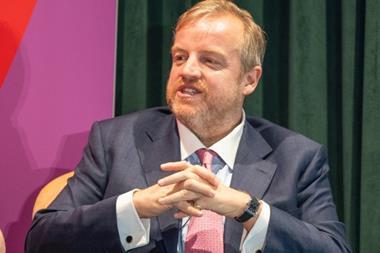
Andy Lewis, head of people proposition at Hedron Network, said that his firm’s own research with brokers showed that “one of the main challenges in attracting talent is that many young people simply aren’t aware of the range of careers and opportunities the sector has to offer”.
However, he felt insurance firms becoming more visible in local decision making under Burnham’s plans would provide more opportunities for the industry to show why young talent should join the industry.
Lewis said: “For maximum impact we need to raise the profile of our sector nationally, but having a stronger voice locally would certainly give firms more opportunities to engage with schools, colleges and their wider communities, helping young people better understand the insurance industry and the career paths within it.
“It would also give businesses a chance to showcase the breadth of roles available, the skills involved and the opportunities for long-term progression across the sector.”
Evans added: ”In towns and cities outside of London, the more that the insurers and brokers are involved in local decision-making, the easier it will be for people to understand the opportunities that are in the insurance market and hopefully be attracted towards it.”
Work with schools
As part of Burnham’s devolution plans, he unveiled a change to the education system that will see schools adapt their curriculum to the needs of local businesses.
From the age of 14, students will have the chance to combine core academic subjects with a technical education that is linked to the jobs available in their area. They will also be able to spend time with employers.
George felt it was essential the industry leans into this, saying the curriculum “needs to be shaped by insurance professionals working with the relevant bodies, schools and colleges”.
“When there’s the curriculum, then the teachers who are going to teach this curriculum need to be better educated,” he added.
“So, we should do some training or empowering and make teachers much [more] aware of insurance and how everything works.
“Then, we need to create some support for students to understand this – a good starting point is creating some financial literacy training for students and, through that, introduce how insurance fits into the wider financial scheme of how everything operates.”
Lewis added: “Insurance firms can play a practical role by working more closely with schools and colleges, whether through careers talks, work experience, mentoring or giving young people a clearer understanding of the skills employers are looking for.
“The focus should be on helping young people see where a career in insurance could take them, rather than solely focusing on what the industry does. That means showing the different routes into the sector, how existing skills can be developed in the workplace and the opportunities to progress through structured training and development.”

His career began in 2019, when he joined a local north London newspaper after graduating from the University of Sheffield with a first-class honours degree in journalism.
He took up the position of deputy news editor at Insurance Times in March 2023, before being promoted to his current role in May 2024.View full Profile

































No comments yet