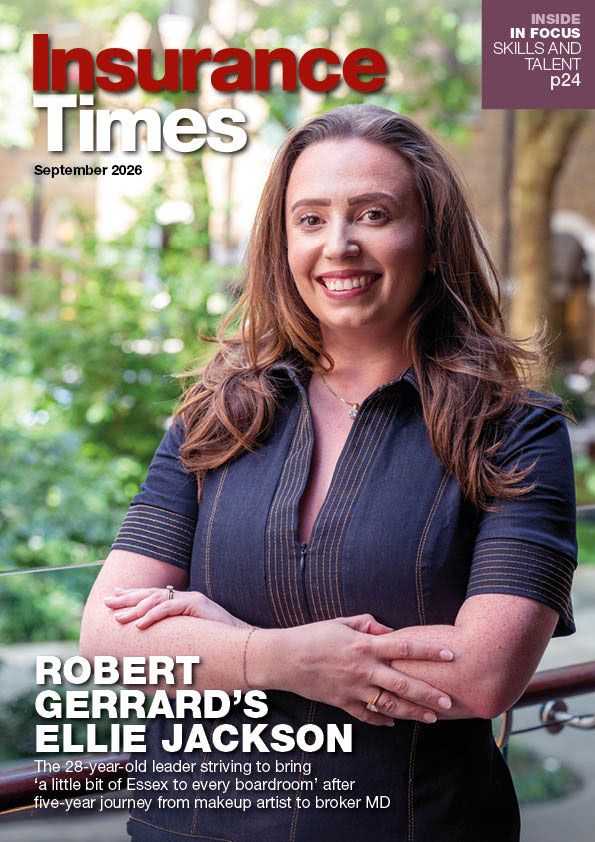



















Sponsored content: Annette Morgan, learning and development partner at HDI UK and Ireland, discusses how to keep employees engaged in L&D in the modern insurance workplace
1. How have L&D programmes pivoted post-pandemic to become more relevant for today’s employees?
Before the pandemic, employee learning and development (L&D) was predominantly in a classroom-based style. Today, with hybrid working firmly established, organisations have adopted a more blended approach that combines virtual, face-to-face and self-directed learning.

The rise of AI has accelerated this shift even further, enabling personalised learning pathways and making learning more accessible in the flow of work.
Employees now expect development opportunities that are flexible, relevant and available when they need them, rather than waiting for a scheduled training course.
2. What is employee appetite around developing soft skills – for example, communication and social skills – and how can businesses encourage engagement?
As the use of AI in business continues to rise, skills such as communication, collaboration, influencing and critical thinking are becoming increasingly valuable.
Over the past year, we’ve seen growing interest in initiatives that help people develop these capabilities. For example, at HDI UK and Ireland we host Toastmasters, a monthly public speaking workshop that consistently attract colleagues who want to build confidence, improve their communication skills and build connections with others across the organisation.
To encourage engagement, organisations need to create opportunities for people to practise these skills in a safe environment. Learning is often most effective when it is social, practical and linked to real workplace challenges. I believe ’power skills’ will become the defining differentiator for individuals and organisations in the years ahead.
3. How has the onset and pace of adoption around artificial intelligence (AI) impacted L&D programmes?
AI is transforming the way we deliver L&D programmes at HDI UK and Ireland. It enables us to deliver more value, more quickly, to our employees.
Historically, L&D teams have sometimes been viewed as training providers focused on content delivery. Instead, at HDI UK and Ireland, we consider them strategic business partners and AI creates an opportunity for the function to evolve even further, using data and insights to identify capability gaps, support performance and drive organisational outcomes.
We also believe that during this period of AI-driven transformation, learning opportunities focused on innovation, AI and digital tools are increasingly important.
While AI helps us personalise learning and identify skill needs more effectively, decisions about development, performance and career growth remain human-led.
4. What are the key pillars that should be included in a L&D programme targeted at a multigenerational workforce?
Many organisations now have four generations working side by side, each with different learning preferences and expectations. While this adds complexity, the starting point should always be the business strategy.
At HDI UK and Ireland, our L&D strategy is built around three core pillars:
- Digitisation – developing our digital capabilities to support future ways of working
- Skills-based organisation – shifting the focus from traditional career paths to the skills needed for current and future success
- Leadership development – equipping leaders with the capabilities required to lead effectively in an increasingly complex and fast-changing environment
While learning methods may vary across generations, a clear focus on business priorities, future skills and leadership capability creates a strong foundation for everyone.