
























‘The global economic landscape is unlikely to stabilise any time soon, so freight forwarders must be prepared for their customers to default,’ says managing director
A wave of counterparty failures is threatening to overwhelm freight forwarders and their insurers as economic turbulence, trade fragmentation and rising insolvencies converge across global supply chains.
TT Club, the mutual liability insurer focused on protecting the global supply chain, has urged logistics operators to adopt stronger credit risk management strategies immediately – warning that the sector faces exposure to client default.
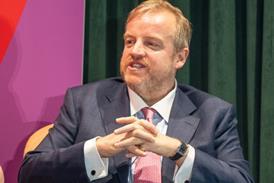
Mike Yarwood, managing director of loss prevention at TT Club, outlined the situation to Insurance Times: “The freight forwarder would purchase freight on behalf of their customer. The customer goes insolvent and does not therefore pay the freight account. That, in a nutshell, is the risk.”
The scale of this problem described by Yarwood is supported by official data.
According to UK government statistics published in April 2025, nearly 2,000 British businesses entered insolvency in March 2025 – this number of registered company insolvencies is 9% higher compared to the same month in the previous year.
Joe Shaw, director of claims at the International Underwriting Association (IUA), confirmed that the trend seen by Yarwood had been building for some time.
He said: “There was an expectation that following the Covid-19 pandemic, we’d see a huge raft of insolvencies – that seems to have taken a bit longer to take effect. We are now seeing projections where that’s going to increase.”
Shaw added that there was “definitely an assumption” across the insurance community ”that insolvencies have increased across the board of companies worldwide in 2025 and are projected to increase in 2026”.
A different kind of default
Yarwood was keen to stress, however, that the losses his members were experiencing were not driven by deliberate wrongdoing, in his view.
Read: UK trade credit insurance market stable amid economic uncertainty – Marsh
Read: Trade credit insurance reaches record £3tn exposure
Explore more risk management related content here, or discover other news stories here
He said: “I don’t think [insolvencies are] necessarily [caused by] bad actor behaviour. Customers are living in a more difficult landscape today than they perhaps were 18 months or two years ago. They’ve been living in quite a dynamic world, taking decisions to either accelerate shipments or pause shipments [while] waiting for certainty.
”The global economic landscape is unlikely to stabilise any time soon, so freight forwarders must be prepared for their customers to default.”
Providing an example of this ”more difficult landscape”, a global survey by Allianz Trade – published in May 2025 – found that 42% of companies worldwide expected a notable decline in export revenues following the changes to US tariffs introduced by president Donald Trump in April 2025, with associated export losses projected to reach $305bn (£222.6bn) in 2025.
This quantifies the economic friction that Yarwood described and demonstrates tangible consequences to supply chain volatility.
Yarwood continued: “One of the manifestations [here] is that the goods arrive in the destination country and there’s no one to collect it.”
Emma Rice, partner at law firm Clyde and Co, said recovery prospects were bleak once a counterparty failed in the manner Yarwood outlined.
She said: “Once a counterparty fails, cargo is usually sold on a salvage basis to specialist buyers [that] purchase goods strictly ‘as is’ – rather than through normal commercial channels where full market value might be achieved. Significant storage, handling and disposal costs often accrue while the cargo is being held or processed, further eroding what can ultimately be recovered.”
Yarwood agreed. He said: “Administrators will come in, but the likelihood of there being enough cash to satisfy all those outstanding debts is slim.”
Cargo feels geopolitical shock first
For Shaw, these cargo considerations act as the fastest transmission mechanism through which geopolitical volatility hits the insurance market.
He said: “In the cargo and the marine cargo market, you see a very direct and immediate impact [from geopolitical situations]. When you get a big global shift, it moves where ships are going to dock, potentially can cause huge delays and that’s where you will see cargo losses.”
He added that trade tariffs were “a great example of where you will see the financial value of what you’re shipping”, noting that these arrangements might make it “more financially viable to reroute that ship and take it somewhere else”.
Yarwood echoed this point. He said: “Geopolitical issues are obviously having an effect. Maybe a shipper’s business model is to ship to Country A – all of a sudden we can’t ship there anymore. We’re having to find different routes, maybe different modalities, which is going to put pressures on.”
For brokers and underwriters, this challenge is compounded by the reality that standard cargo policies may not respond to credit driven losses.
Yarwood said: “The standard liability policy probably wouldn’t pick up credit risk. If you’re a freight forwarder working for anyone [that] presents opportunities, then maybe your credit risk is larger.
“The greater risk is those ad hoc shipments for lesser known shippers. Somebody approaching out of the blue wanting to move 20 containers from A to B. What seems like a hugely lucrative opportunity – if it seems too good to be true, it probably is.”
Theft threat
Meanwhile, organised cargo theft is adding to insolvency pressure.
Research published by cargo theft prevention and recovery business Verisk CargoNet in January 2026 revealed that cargo theft losses in the US and Canada increased by 60% between 2024 and 2025 due to organised criminal groups homing in on high value shipments.
Losses associated with supply chain crime in these jurisdictions amounted to $725m (£529m) in 2025, with the average value per theft rising to $273,990 (£200,000) – up 36% from $202,364 (£147,710) in 2024.
Verisk CargoNet additionally recorded 3,594 supply chain crime events across the US and Canada in 2025, with incidents involving confirmed cargo theft increasing 18% year-on-year from 2,243 in 2024 to 2,646 last year.
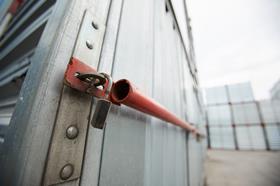
Yarwood said: “Today, criminals are far more sophisticated. They have vast amounts of intelligence. They know exactly which cargoes are in which trailers. They’re not stealing a few cases anymore – they go with the absolute intention of stealing everything.”
Rice added: “Economic pressure is certainly driving more claims, but it’s also contributing to a rise in opportunistic thefts as operators and subcontractors come under strain.”
A new reality
Shaw offered far-reaching assessment on these amalgamating factors impacting the cargo and freight industry.
He said: “The isolationism and the pressure on supply chains is a shift that’s here to stay. We’re moving from a more globalised world, where everything was interconnected, to an environment where a lot of those connections are being shut down. That does increase the cost of claims in general, just because there is more friction there. It’s just a new reality.”
For Yarwood, the answer to this challenge is grounded in business fundamentals. He said: “Know your customer – know who they are, what they are, their trade history. There can’t be enough emphasis put on the importance of knowing your customer. In the digital world, those principles have been diluted.”
Rice added that the time for proactive intervention in this marketplace was now.
She continued: “In a market where insolvency risk is rising, early intervention, contractual clarity and disciplined monitoring are becoming essential tools for protecting both operators and their insurers.”




Hosted by comedian and actor Tom Allen, 34 Gold, 23 Silver and 22 Bronze awards were handed out across an amazing 34 categories recognising brilliance and innovation right across the breadth of UK general insurance.




















No comments yet