














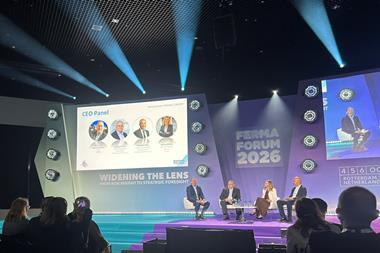
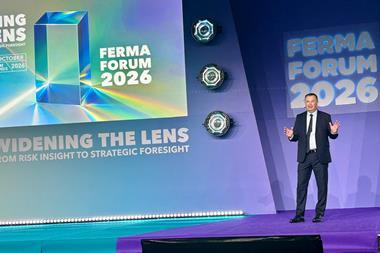
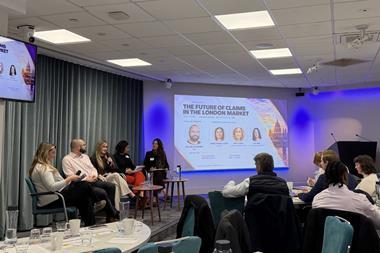
Insurer leaders took to the plenary stage at Rotterdam’s Ferma Forum 2026 event in October, providing an array of thought provoking stances on the risk and insurance industry’s status quo, direction of travel and which pivots are central to sector futureproofing
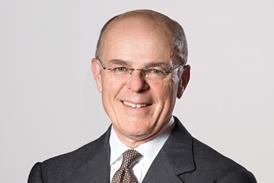
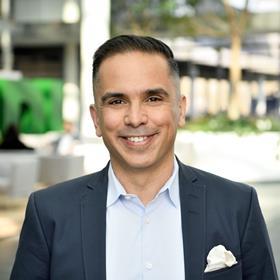
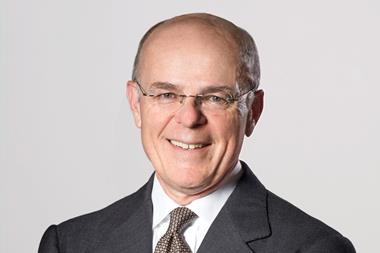
Mukadder Erdönmez, executive board member, HDI Global
I want to talk about Minority Report – a movie in the early 2000s with actor Tom Cruise.
The movie takes place in 2046 and society has moved away from punishing crime to preventing crime. So, how did society do it? It basically established a group of people within the law enforcement organisations to predict when a crime happens, who commits the crime and where it takes place.
With this information, the law enforcement organisations decided not to wait until the crime happened, but to move towards prevention – arresting the individual prior to the crime.
That entire concept moved away from not looking at an event until it happened and started to actively work on preventing and predicting it.
If we transfer that idea to our industry, of not waiting for the loss but really starting to say ‘let’s avoid the claim’ – how do we do that?
The Global Risks Report 2026, published in January 2026 by the World Economic Forum, looked at risks today, in two years and in 10 years. This found there are three main clusters: climate change, artificial intelligence (AI) and geopolitics. If you look at all of that, you realise quickly it’s really interconnected. It creates a situation for our clients where the risks and losses get more complex, more severe.
So, instead of doing risk transfer, I think our industry needs to move towards predicting and preventing the claim. We are doing more prediction work in property around modelling, but we need to transfer that capability to other parts of our organisations.
For instance, we are working in liability on modelling a scenario of what is the impact of 2023’s Representative Actions Directive, which protects the collective interests of consumers, on our clients. With this, we can start working with clients on preventing what is going to come.
But when we speak about preventing, we clearly see that in a lot of areas, we’re not there yet. In cyber, for example, this is a very young line, but at the same time, it’s one of the most progressive lines. We’re working with risk engineers on looking at where there are gaps in cyber security, to then enhance the cyber resiliency of our clients.
So, preventing the loss is more important than actually transferring the loss.
But also, let’s be frank. No model is able to model everything. We will always have those events where we say it is a black swan and it is something we have never seen before. So, for us, it’s not only about risk transfer because at the end of the day, we can do that, but the risks just get too complex – they’re too big.
Read: Leveraging insurance data for risk foresight is a “real opportunity”
Read: Insurers must pivot to become ‘more customer-centric’
Explore more risk management content here, or discover more news here
For us, it is clear. If our insurance industry wants to not only survive but really thrive, we need to move away from risk transfer. The future in our industry can only be predicting, preventing and protecting.
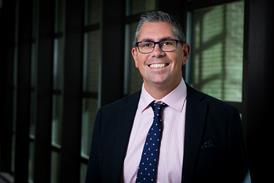
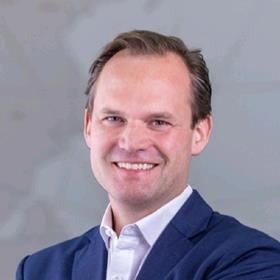
Ole Ohlmeyer, global head of alternative risk transfer, Swiss Re Corporate Solutions
We all talk risk. But what is our risk as an insurance industry? Our risk is to become obsolete.
And when listening to conversations around emerging risks, huge new technologies and everything else. people say ‘hey, don’t worry, you are needed. We need balance sheets. We need capital’. But is that really true?
Risk managers have so many more opportunities nowadays to manage their risks. You can go traditional. You can go in the alternative risk transfer space. You can look at captives, monoline cell companies, or you can choose all kinds of other means. But all of that is supercharged and powered by AI and technology.
What this means is we are not looking anymore at ‘how do I insure this?’ We are looking at ‘how do I make this risk manageable?’ In the end, we must talk as an industry about risk – not about product.
Resilience is what our industry needs. When looking at resilience, I came across the Swiss cheese model. The Swiss cheese is known for having different layers and holes, but when you combine all of them, it makes up a very resilient system. Insurance is one layer of the Swiss cheese – or the resilience layer – and I think it’s very important. Only if all the different layers work together, the Swiss cheese will function.
What it also requires is intelligence and we hear a lot about artificial intelligence. The biggest challenge we have is human intelligence in that. Expertise without understanding is not intelligence.
And then we need to know when insurance is the answer. With all the technology and data available today, none of us can stop a hurricane. None of us can predict or prevent that a supply chain will fail. But we can help, as an industry, to understand the risks, understand the weaknesses and then intervene where it matters most. So, insurance may be the answer, but it may not be.
And let’s talk about the intelligent insurer, the human layer. Data models, risk engineering capabilities, insight, claims expertise – all of that only functions because of the human layer.
So, will we survive as an industry? Yes, we will. Will we thrive? Yes, we will thrive. But the objective is not insurance. The objective is resilience. Resilience is an ecosystem of layers where weaknesses do not line up and that’s what we, as an industry, have to build. We will survive.
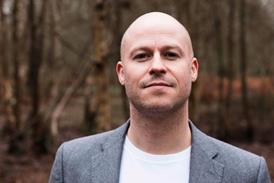
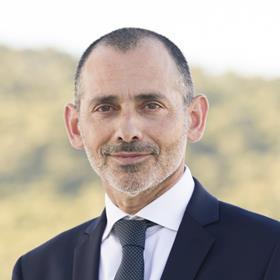
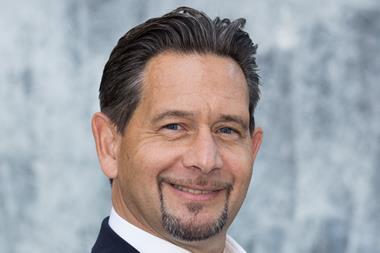
Shay Simkin, chair, Howden Cyber
When technology doubles, we need a different set of skills. Only three years ago, the smartest AI could only do three to four seconds of work by itself. Now it goes for a full day. This rate of productivity is doubling – doubling every few months, not years.
This is not science fiction. This is my day to day.
As I stand here, there is a team of agents around me, working day and night, helping shape the products of our future. And we’re not just standing and watching this transformation happen to our industry. We’re shaping it.
One day, your children, your grandchildren will ask you ‘what did you do in 2026? Were you just a spectator, or did you play an active role in shaping the future of your industry?’ The window to lead is open. The opportunity is here and now – 2026 and 2027 are the years. If we just stand, the opportunity will pass by.
Every time the world changed, we were there to help shape it. When ships crossed the ocean, we invented marine insurance. When cars went on the road, we invented car insurance. When the internet came around, we invented internet insurance. Every world needed a new protection – and we provided it.
Now our world is being rebuilt again – a world of autonomous agents, machines working with each other. This is a market that is not yet insured, so we can insure it. The Massachusetts Institute of Technology has already identified 1,700 risks linked to AI. Very few of them are insured. It is an opportunity for us.
The rules are being written now and they should be written by us. We know best. We know how to manage risk. This is our business. This is what we have been doing. AI is just another risk. Maybe it’s a little bit more complicated, maybe a more challenging one, but it is another risk and we do not run away from risk. We insure them.
The insurance industry survives not by standing and waiting for the storm to pass. It thrives by becoming the next thing that the world stands on. We become the floor the world stands on. We thrive by becoming the seat belt, not the handbrake.
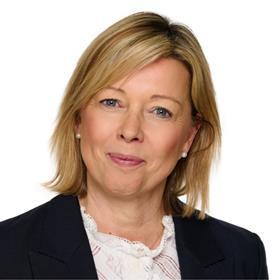
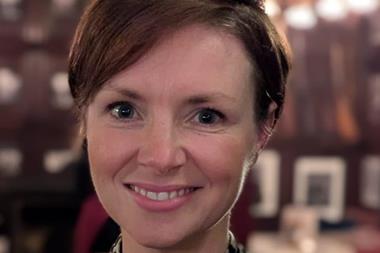
Elke Vagenende, chief client officer, Allianz Commercial
About 20 years ago, I was a risk manager of a really big industrial company and I got that call that risk managers never want to get. This was not a normal claim. This was absolutely something that would shake the company. I remember going through the policies and that fear kicks in, right in the pit of your stomach. Have I done something wrong? Do I understand the process?
And actually, what I still remember 20 years later is a person on the other side of the call. It was somebody in the insurance company, not the most senior person, but a person that took the time and understood what I was going through. Twenty years later, I’m sitting on the insurer side – and I still carry that experience with me.
It is easy to have gloom and doom. Our insurance industry is still not capable of insuring all the risks that are out there. It is very easy to get scared and say ‘will we become extinct?’ But I think when an industry is scared or feels under threat, what it starts to do is focus on efficiency and on the process. And that is what we’re all experiencing in our companies today. AI can do it better, do it faster.
For some parts of the insurance industry, that is probably true. I do think some parts of what we do will disappear – but not the people.
Whether we are insurers, risk managers or brokers, we deal with the most complex risks there are and that complexity cannot just be done by an algorithm.
For example, whether you should buy captive insurance and on what layer. Yes, you can get models and, of course, we should use them. But this will never give you the exact answer because the exact answer depends on the culture of your company, depends on the people and depends on so much more than that.
We do not need to do site visits anymore technically. We have enough data rolling, we can do it remotely. But what you can’t get remotely is the culture and the people that are there. And that will make your risk different from anyone else’s.
I have sat in so many renewal meetings internally where we say it does not make sense. We should not renew at this stage. But we still do and the reason we do is because we have a partnership and that partnership is built on trust.
I would even argue that what you are buying is not a policy. What you are buying is trust and a promise to pay – and that will involve humans. Of course, the policy wording is important because that is where we document things. But we need those connections as people. In our industry, it is not just about paperwork, but about the human connections and building trust.
I still remember the person on the other side of the phone 20 years ago who helped me out. My challenge to you is who will still remember your name in 20 years’ time?
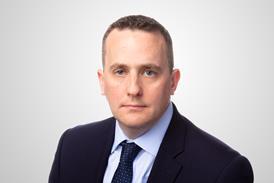
Xavier Veyry, Apac and Europe chief executive, Axa XL
Every great journey starts at the harbour. History forgets the risk, but every journey starts with uncertainty. The first ship leaving the port, the first aircraft, the first spaceship – none of those journeys started with certainty. They started with confidence.
Every generation faces the same choice – to stay safely at the harbour or to sail toward the unknown. Four hundred years ago, merchants stood on the docks, watching ships disappearing beyond the horizon. No map, no weather forecast, no certainty they would ever return – and yet they sailed. Why? Because they knew they would not face the risk alone because a group of traders and underwriters made this simple but revolutionary promise – we cannot remove uncertainty, but we will share it with you.
Insurance was not born from the fear of uncertainty. It was born from the refusal of letting uncertainty stop progress.
People often say that we live in a world of unprecedented uncertainty. I do not believe that. I believe we live in a world of unprecedented visibility. No industry on earth has ever collected as much data as ours about risk. The question has historically been ‘how do we transfer this risk?’ The question should be, however, ‘how do we support businesses to face into the unknown and help them imagine the world they want?’
Every expedition depends on an ecosystem. People who build the ships, people who draw the maps, people who finance the journey, people who understand the risk. And 400 years later, nothing has changed. Leaders define where the organisation should go. Risk managers help identify what could go wrong along the way. Brokers connect ambition with solutions and insurers provide the confidence.
For centuries, insurance was measured by its ability to pay and indemnify losses. Today, it is measured by its ability to predict risk, prevent them, and protect and support organisations to recover faster.
Technology expands the possible, but confidence determines whether we use it. Think about what Europe has to face and needs to focus on in the next decade – AI infrastructure, energy sovereignty, green transition, data security and data safety.
All of these are often described as technological challenges, but they are equally confidence challenges. Will we invest at scale? Will we innovate fast enough? Will we adopt and adapt and transform before others? All those decisions depend on the confidence built on science and evidence, trusted data and strong partnerships.
This changes the role of every one in our industry and ecosystem. Risk managers no longer just protect value – you help create it. Governance is no more the finishing line – it is a licence to grow. Some people ask whether insurance will thrive or survive. I think this is the wrong question. I think the right question is ‘can our economies keep progressing and developing without it?’
Read: PHP vulnerability raises fears of systemic cyber claims
Explore more risk management content here, or discover more news here
Every great era has always depended on two kinds of infrastructure. Firstly, the infrastructure we can see – the ports, the power grid, the data centres. And secondly, the one we cannot – trust, finance, insurance. Without the first, economies cannot function. Without the second, economies do not move. And this is our common purpose. That is why we are here.
We cannot decide where the ship is going. But together, we create the confidence for the ship to leave the harbour.
Hannah Witzel, chief executive for Germany, Austria and Eastern Europe, FM
When is the last time you did something risky? Something you prepared for, something intentional, and something that could have led to a lot of reward or a lot of downside?
For me, it was in February this year. I was on a skiing holiday with my husband. We had blue skies, no clouds, fresh snow. Everything was according to plan – until it wasn’t. I hit a patch of ice I never saw coming and I lost control. And crash – I hit my leg bone and I broke it. The femur was gone.
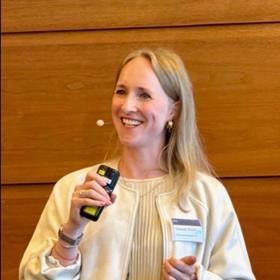
Within seconds, my holiday and the weeks after became a totally different story. For three months, I could not put any weight on my leg. After, I had to learn how to walk again with a lot of screws and a plate in my leg.
You could say that skiing is intentionally risky. But, I had done a lot right. I prepared. I took lessons. I had good equipment. Everything was there, but I still had the accident. Why? Because preparation does not eliminate risk.
The good news, however, is that preparation does change the outcome. I’m convinced my personal ski story is one every risk leader is living through right now. The risk is not a problem, but how we prepare and how we understand it is.
The risks that we’re facing today are very broad. A climate event can lead to a supply chain issue. A construction hazard can bring a large fire. And what matters is that we understand those connections before they turn into bad consequences.
I’d argue that our industry does not have a choice anymore. For decades, we have been excellent at insight. We know what happened, we price it, we pay for it and that is important. But it is no longer enough. Insurance can help you financially recover. However, on its own, it cannot help you prevent or reduce the loss from happening.
So, what can actually help? Science and engineering. Science helps us understand the risk. Engineering enables us to act. Without science and engineering, we would only be guessing. The better we know what can fail, the better we can do something about it – and that is before the loss.
Insurance backed by science and engineering is addressing risk head on. This belief is not new – it has been around for 200 years.
Zachariah Allen in 1835 improved the safety of his textile mill, but his insurer would not recognise his efforts when it came to pricing the insurance premium. So, Allen decided to widen the lens. He invented an insurance company – the Manufacturers’ Mutual Fire Insurance Company – not purely focused on preventing losses, but driving those down.
And that is what the greatest value of our industry is – not avoiding losses, but to have losses as a brief disruption rather than a disaster. That is what happened with my femur bone. It was a disruption, but it was not a disaster.
Today, I’m happy to say I plan to ski again because life, like business, is not avoiding the losses. It is about understanding, addressing and facing risks head on.
For further insight from Rotterdam’s Ferma Forum 2026 conference, held in October 2026, head over to sister site Strategic Risk

Since joining Insurance Times, Katie has successfully obtained a number of industry accolades. At trade body Biba's 2025 Journalist and Media Awards, for example, Katie was named the overall winner and received the Journalist of the Year trophy, alongside the Best Thought Leadership Award for her briefing article on reproductive health MGA Juniper and how insurance can be used to positively impact taboo subjects.View full Profile














No comments yet