



















Successful risk managers of the future will ‘understand connections, navigate uncertainty that doesn’t fit neatly into a risk register, see around corners and imagine futures that haven’t ever happened before’, says insurer chief underwriting officer
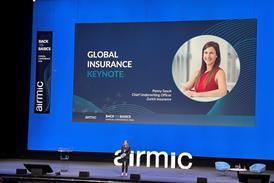
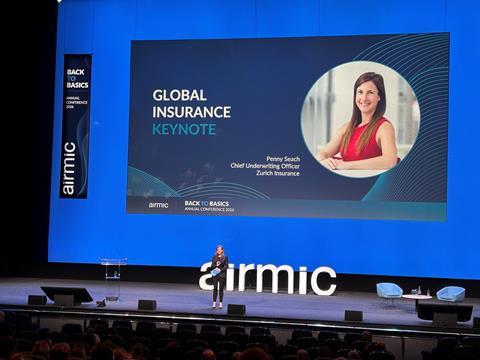
Airmic 2026: Risk managers will need to get more “comfortable” navigating and operating in the gaps between traditional risk buckets or categories as the profession evolves in response to risks that “refuse to stay in their lane”, according to Penny Seach, chief underwriting officer at Zurich Insurance.
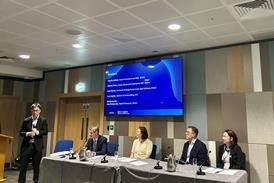
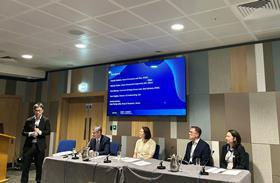
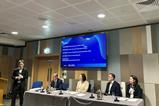
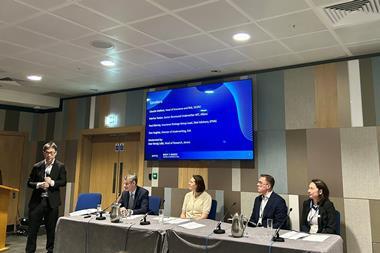
Delivering the penultimate plenary session on the first day of trade association Airmic’s annual conference in Birmingham (15 June 2026), Seach told delegates that many tools at risk managers’ disposal only perform well when risks can be categorised into single buckets – however, the nature of risks today are incredibly interwoven, with “consequences [coming] from the connections” between risks.
She used 2020’s Covid-19 pandemic as a prime example here – this “started as a health crisis that quite quickly transformed into a workplace crisis that then hit supply chains. That drove up inflation and we had an inflation crisis. A political crisis. Ultimately, what it ended up with was being a social crisis”.
Seach said: “The largest disruptions emerge not from the risks that we understand the best, but they emerge from dependencies that we understand the least.
“Our tools that we have today, they are very relevant and work well in a world where risk can be categorised and classified into single risk categories and, therefore, you can manage it as individual risks – but risks refuse to stay in their lane.
“Where does artificial intelligence (AI) risk belong? Information technology (IT), compliance, legal, marketing, human resources (HR)? The answer is yes, yes, yes, yes and yes. Same thing around geopolitical fragmentation, supply chain resilience, cloud concentration.
“If risks refuse to stay in their lane, why do our organisational structures try and put them back into lanes? And I would say that as risk experts, if we can be comfortable in navigating and operating in these gaps, that fundamentally is where our risk profession is going.”
Describing risk professionals as the translators between uncertainties and actions, Seach emphasised that the “losses that are emerging today are not emerging from a failure to understand a single risk, but they’re emerging instead from the interaction between risks”.
For her, this demands “a different set of capabilities” from future risk leaders that have to navigate a “fantastic” and “exhausting” pace of change in organisational risk profiles.
Seach continued: “This is such a fundamental, different challenge for us and because it’s so fundamentally different, it really demands from us such a different mindset and it does demand a different set of capabilities from us.
“The future belongs to those of us that do not just simply understand risk, but it belongs to those who understand systems – and I’m not talking about IT systems. It belongs to those who understand connections, those who can navigate uncertainty that doesn’t fit neatly into a risk register, those who can see around corners, and to those who can imagine futures that haven’t ever happened before.”
Professional blind spots
For Seach, there are “two blind spots within our industry”.
Read: PRA sets out vision for UK captive regime ahead of consultation
Read: Autonomous vehicle safety principles welcome, but more work needed – Thatcham Research
Explore more risk management related content here, or discover more news here
The first is experience. She explained: “Experience teaches us about pattern recognition. Experience teaches us based on what we’ve learned, what we’ve known, what historical data can teach us. [But] what do you do in a world where there is no historical precedent? We can’t just throw our hands up and go ‘oh well, we’ll just wait and see what happens and then we can start to learn’.”
The second blind spot is around understanding data insights, Seach continued, and “confusing visibility with understanding”.
She told delegates: “We live in a world of data and data-led insights, but how often do we confuse seeing data points with really understanding what the signal is or what that insight is really telling us.”
Linked to this, Seach suggested that “probability thinking” could be a third blind spot – however, she confirmed that she has observed “one of the most profound yet quite subtle shifts” around the use of probability models. Namely, moving from “assigning probability” to “exploring pathways”.
She explained: “As risk experts, we are trained to ask what is likely to happen – and yeah, I’m talking about probability models. But probability models rely on experience, data and other things that you can model and try and quantify to get a percentage of probability around.
“Instead, we are [now] exploring pathways of how do we think the unthinkable. Maybe this is a little bit of a different approach because this fundamental shift stops us from asking how likely [a risk] is to happen and instead we start thinking about how could it happen.”
Technology is new frontier of risk
In terms of emerging risks, Seach ringfenced “technology risk” as the “new risk frontier” that is “redefining the boundaries of insurability”.
To tackle this, however, she recommended that risk managers have “the courage to speak up” and not be daunted by a risk they may not have as much expertise on.
She said: “We know that we have no experience to be teaching us the way forward here, but this is where I would say, as an industry, we really need to have the courage to think differently [and], more importantly, the courage to speak up.
“I started off by talking about how we value our expertise, how we’ve grown our careers through our knowledge and through our own expertise that has made us credible. It’s not easy to ask questions when you think that you should know, when you think you should be the expert, so we’re definitely going to need to have courage to be able to do that and to step up.
“This is the only way that we’re going to be able to lead. We are not here to avoid uncertainty, that’s impossible. Our job is to help navigate with confidence and getting this right is where we will see underwriting reemerging as a competitive differentiator.”
Since joining Insurance Times, Katie has successfully obtained a number of industry accolades. At trade body Biba's 2025 Journalist and Media Awards, for example, Katie was named the overall winner and received the Journalist of the Year trophy, alongside the Best Thought Leadership Award for her briefing article on reproductive health MGA Juniper and how insurance can be used to positively impact taboo subjects.View full Profile
Airmic 2026: Tripartite communication central to tackling protection gaps

Insurance sector still scratching head over ‘muddy’ emerging risk of intellectual property, cyber and general liability cross-section – Lockton

Parametric policies are steering risk transfer from annual renewal cycles to a resilience mindset – Descartes Underwriting






















No comments yet