















Legal organisations are homing in on education as an important tool to tackle ghost broking tactics
Participants in Insurance Times’ Fraud Charter – a roundtable series held in association with law firm Carpenters Group – are seeking to stamp out ghost broking in UK general insurance (UKGI). The Fraud Charter Ghost Broker Focus content series will highlight how Fraud Charter attendees are working to identify, eliminate and prevent ghost broking from different market subsectors. Sharing this knowledge and best practice work is an important way for the industry to collaborate against insurance fraud.
Law firms that participate in Insurance Times’ quarterly Fraud Charter roundtable series – an industry focused counter fraud collective, hosted in association with Carpenters Group – are undertaking education of both young consumers and early career talent in a bid to raise awareness of ghost broking tactics and prevent the uptick of this type of fraud.
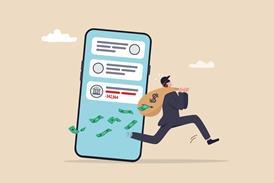
On its website, the FCA defines ghost brokers as “criminals posing as legitimate insurance brokers. They sell fake or invalid insurance policies, often for cars, at seemingly cheap prices”.
It continued: “These fraudsters often use social media to target young drivers, producing fake documents that look very similar to the real thing.
“They’ll often ask you to use messaging apps like WhatsApp, hoping it will be harder for anyone to catch them. Once you’ve paid, they then disappear.”
Ghost broking is a growing problem in the UK general insurance (UKGI) market, with figures published by not-for-profit organisation the Insurance Fraud Bureau (IFB) in 2025 confirming that this fraudulent activity has grown by more than 50% over the prior two years.
In addition, the IFB noted that 115,000 fraudulent motor insurance policies were detected between 2023 and 2024 – with the organisation pointing the finger at ghost brokers for being responsible for the majority of these.
Liverpool headquartered law firm Carpenters Group is a member of the IFB, as well as being the sponsor of Insurance Times’ Fraud Charter – it explained that it “takes the threat of ghost broking extremely seriously”.
For example, the firm’s defence team “regularly monitors developments, shares insight internally and contributes informed commentary to the press, helping raise awareness and promote best practice across the sector”.
It also works “collaboratively with partners, such as Covéa Insurance, sharing intelligence and aligning approaches to tackle ghost broking effectively”.
Carpenters Group added that tapping into the IFB’s existing resources is helpful as well.
The law firm explained: “As a member of the IFB, we actively use [its] guidance and educational resources to strengthen understanding of ghost broking and wider insurance fraud across our business.
“These assets help ensure our teams are informed about emerging trends, evolving tactics and the real‑world risks posed to consumers and insurers alike.
“By embedding this knowledge throughout the organisation, we are better placed to identify red flags early and respond decisively to suspected fraud.”
Sharing education
A common thread across law firm counter fraud activity is education.
Carpenters Group, for example, told Insurance Times that it is “deeply committed to educating younger and early career colleagues about the risks and consequences of ghost broking”, to support these newer employees “to build strong technical foundations and an ethical, fraud aware mindset from the very start of their careers”.
Read: Aviva stops record levels of claims fraud as new scams identified
Read: Ghost portals ‘fool every police officer’ as new fraud trend undermines frontline policing
Explore more Fraud Charter related content here, or discover more news here
On the flip side of this, Ruth Needham, partner at London headquartered law firm Kennedys, noted that her business is seeking to educate students at local schools and sixth forms who are about to purchase their first insurance policy – typically a motor insurance policy when undertaking driving lessons or after buying their first car upon passing their driving test.
“We explain what a ghost broker is, how [this fraud] works and what it can mean for them if they are not insured,” Needham said.
“We also talk about TikTok and how this platform, in particular, allows ghost brokers to advertise and take advantage of teenage children.”
Sharing industry knowledge such as this is vitally important as June 2026 research from CompareNI.com found that 66% of 700 polled motorists in Northern Ireland are aware of ghost brokers selling fake insurance policies on social media and messaging apps, but only 49% stated they are confident to detect such fraudulent policies.
A further 44% of respondents said they were concerned about being scammed into buying fake car cover.
Commenting on the rise of ghost brokers, Nik Jethwa, detective chief inspector at the City of London Police’s Insurance Fraud Enforcement Department (Ifed), said: “Ghost brokers leave their victims out of pocket and exposed to the same consequences as uninsured drivers.
“As part of the national lead force for fraud, Ifed is dedicated to working with our policing and industry partners across the country to disrupt these criminals and protect the public.
“There is nowhere to hide for criminals who sell fake insurance. Ifed will use every tool at its disposal to hold offenders to account, including removing the assets they have obtained through criminal activity.”

Since joining Insurance Times, Katie has successfully obtained a number of industry accolades. At trade body Biba's 2025 Journalist and Media Awards, for example, Katie was named the overall winner and received the Journalist of the Year trophy, alongside the Best Thought Leadership Award for her briefing article on reproductive health MGA Juniper and how insurance can be used to positively impact taboo subjects.View full Profile




















No comments yet