






















The MGA’s head of Europe, UK, Middle East and Africa explains that parametric insurance covers are encouraging risk transfer strategies to swap a material damage focus for an operational disruption response, giving organisations an ‘extra edge’
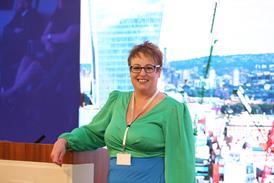
Airmic 2026: Risk managers must pivot their risk transfer focus from asset-based “material damage” to concentrate on “operational disruption” as the global risk landscape – particularly in the UK – is evolving faster than traditional annual insurance structures, said Blanca Berruguete, head of Europe, UK, Middle East and Africa at managing general agent (MGA) Descartes Underwriting.
Speaking exclusively to Insurance Times, Berruguete urged risk functions to fully consider parametric insurance policies as a viable tool within a risk transfer arsenal because it is essential to “move the conversation” forward around interconnected risks and ripple effect ramifications across operating geographies and business divisions.
For her, this is a key topic of conversation that she hopes will be progressed during the three-day Airmic Conference this week (15 to 17 June 2026).
She said: “Right now, we are in a global world and it’s not only our assets being damaged, but the implications [for] businesses and the operating [models they] have. I think sometimes clients aren’t fully aware of all these aspects.
“UK risk is changing faster than traditional insurance structures, so the answer is not to replace the existing market, but to complement it with more precise, data-driven tools that help clients understand their exposure, act earlier and recover faster.
“Parametric insurance is one of those tools available and it brings speed, transparency and flexibility. It’s a very scientific approach that I feel is very strategic for risk managers.”
Parametric insurance, also called index-based insurance, is a type of insurance policy that pays a pre-agreed, fixed amount for a claim when a specific pre-determined trigger is met – for example, a certain quantity of rainfall, river height, wind speed, temperature or drought levels.
In contrast to a traditional insurance arrangement, parametric policies do not typical involve loss adjusters to set claim compensation based on post-event damage, but all the levers of the cover are agreed at policy inception between an organisation and the parametric policy provider.
“That means the client knows in advance what data will be used, what event level activates the policy and what payment they can expect,” Berruguete explained.
“This is a gamechanger because it’s very black and white. There’s no real controversy. It’s very clear and this is very good for risk managers because it reduces uncertainty [and] allows the risk transfer programme to respond to losses that can be difficult to capture through traditional indemnity insurance.
“I would not describe parametric insurance as a replacement for traditional insurance. The right word would be compliments and gives risk managers an additional tool to make the [risk transfer] programme more resilient – particularly when the concern is not only the financial loss amount but the speed of the recovery.”
Risk safety net
In terms of what Berruguete means by risks that are potentially slipping through the traditional indemnity net, she ringfenced “indirect” risks as an important one.
Providing an example, she explained: “Imagine if typhoon in Taiwan is affecting your business in the UK because you need a special piece of equipment that sits in Taiwan. That typhoon can trigger a parametric [policy] covering the UK client because [it is] financially affected.”
Risks that impact businesses but that do not result in physical damage is another area where parametric policies can come in handy, Berruguete continued.
Read: Gallagher partners with MGA over parametric golf course flood protection
Read: In Focus – Middle East conflict reveals ‘huge risk management gap’
Explore more risk management related content here, or discover more news here
For example, if fluctuating weather conditions affect cement drying times on a construction site and, therefore, project completion times, or if high wind speeds mean that train companies cannot operate their vehicles, yet passengers have still booked travel tickets and will require some compensatory action.
Usefully, parametric policies are peril-based, rather than being centred around insurance lines of business, which Berruguete believes can create more bespoke cover for corporates – as well as help risk managers cope with emerging risks.
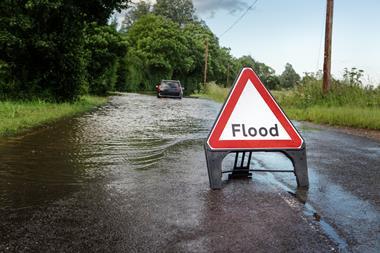
The emerging risks on Berruguete’s radar for the UK include wildly fluctuating weather conditions – such as floods, heavy rainfall and heat stresses – as well as “water scarcity, infrastructure pressure, supply and disruption [and] energy resilience”.
Berruguete urged risk managers to “move from an annual renewal mindset to a resilience mindset” when thinking about emerging risks – something she feels parametric cover is supportive of.
“Parametric coverage can help by creating an objective financial response to a measurable event,” she said. “You can provide this fast liquidity [and] continuity planning. Emerging risks, we can manage them, but they require us to move from an annual renewal mindset to a resilience mindset.”
Although Berruguete is naturally positive about the role of parametric insurance, considering her position at Descartes Underwriting, she acknowledged that a careful consideration and potential pitfall is basis risk and whether “the liquidity [will] meet the damage that we anticipate”.
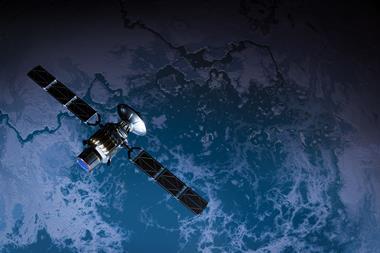
Another key driver of parametric success is the underlying data used for modelling. “Better data allows us to design more accurate triggers,” Berruguete added.
Captive consideration
For Berruguete, the “next level of sophistication” around parametric policies is their use within captive arrangements – where an organisation establishes its own insurance subsidiary to cover certain risks, rather than purchasing an insurance policy and transferring that risk to a commercial insurer.
She said: “You gain more control of your assets, [combat] the volatility of the market. We’re able, in many cases, to provide long-term agreements (LTAs) and that’s quite unusual these days with climate and natural catastrophe [risks].”
To introduce parametric policies into a captive, Berruguete recommended that risk managers be “surgical” and factor in “that particular asset that is giving you extra work and that might bring a big loss”.
By way of an example, she referenced if an airport closed due to a wildfire, this would still affect nearby hotels that may experience a drop in business volume and cancellations due to tourists being unable to travel or undertake flights. However, a prompt claim payout from a parametric policy could provide enough liquidity for compensatory action, protecting hotels’ brand reputation.
“I believe that parametric solutions always give you this extra edge to make you different from the rest,” Berruguete said.

Since joining Insurance Times, Katie has successfully obtained a number of industry accolades. At trade body Biba's 2025 Journalist and Media Awards, for example, Katie was named the overall winner and received the Journalist of the Year trophy, alongside the Best Thought Leadership Award for her briefing article on reproductive health MGA Juniper and how insurance can be used to positively impact taboo subjects.View full Profile























No comments yet