























‘We’re moving away from insuring the behaviours of a driver to insuring the behaviours of an algorithm,’ says director of motor underwriting
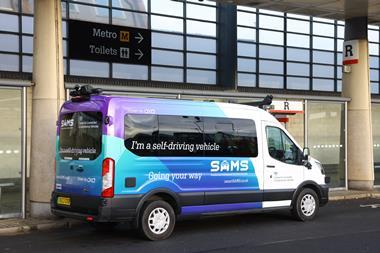
As autonomous vehicles (AVs) prepare to take to the capital’s roads in 2026, the UK general insurance (UKGI) market faces a once-in-a-generation realignment. For the first time, motor insurers will need to underwrite data and cyber enabled fleets.
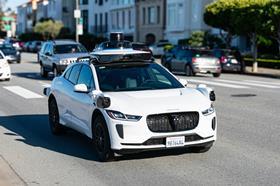
The UK government announced in June 2025 that it would accelerate the introduction of the Automated Passenger Services (APS) permitting scheme from spring 2026. This regime, which sits under the Automated Vehicles Act 2024, will regulate how driverless taxi, private hire and bus style services operate.
But beneath the headlines of economic opportunity surrounding AVs – £42bn of predicted value by 2035, according to government officials – lies a complex risk challenge. From the temperament of algorithms to data sharing mandates and cyber exposure aggregation, UKGI is on the cusp of an underwriting revolution.
According to current goalposts set by the UK government, insurers will remain the first point of compensation when an automated vehicle causes an accident – whether it is in manual or autonomous mode.
The government’s forthcoming APS permit scheme, which will enable driverless taxis, will further define distinct operator and manufacturer liability.
Jon Dye, director of motor underwriting at QBE Europe, explained: “The Automated and Electric Vehicles Act 2018 dealt with this as a starting point in terms of where liability sits.
”From a civil liability perspective, it will mean that cover remains. Whether [AVs are] in manual mode or autonomous mode, the first point of call will be the motor insurance.”
Underwriting the algorithm
The most profound shift for motor underwriters looking to cover AVs, however, is the move from assessing human error to evaluating code. Insurers will need to price sensor redundancies and understand the risk profile of specific software stacks, for example.
Frank McCleary, senior partner at consultancy Arthur D Little, explained: “Not every situation is going to have the same outcome based on a multitude of factors – the ability of double redundancy of sensors or triple redundancy of sensors, whatever it may be.”
For insurers, this means underwriting for AVs will be linked to quantifying software used in each vehicle – in other words, how risk averse or assertive an algorithm is when merging onto a motorway or negotiating a roundabout.
Dye said: “We’re moving away from insuring the behaviours of a driver to insuring the behaviours of an algorithm. We will be underwriting the competency of the algorithms, in my opinion.”
For him, this behavioural code for AVs will vary between manufacturers too. “Do they all operate in the same way? Do they all have the same probability of having an accident?” Dye asked. “How competent are they dealing with a roundabout in snow? In the dark? In fog?”
Academic studies from New York’s Cornell University suggest that Dye’s apprehension is not unwarranted.
Research published by the education institution in February 2025 on safety conceptualisations in automated driving regulation warned that inconsistent definitions of risk between engineers and regulators could hinder product authorisation. That ambiguity could leave insurers underwriting uncertainty rather than measurable exposure – a potential flashpoint for early losses or disputes.
Roundabouts, rain and risk
Aside from the underwriting question marks linked to AV algorithms, current British infrastructure also throws up a keen challenge to automated driving thanks to weathered road infrastructure and different local driving styles at specific junctions.
Read: From Uber to robotaxi – Rising premiums and the driverless dawn steer taxi cover trends
Read: Insurance sector urges detail on liability in self-driving vehicle rollout
Explore more motor related content here, or discover other news stories here
McCleary observed: “Whether you’re making a left [or] getting into a roundabout – the [technology] stack needs to understand where other vehicles are. The challenge is going to be the decision-making in highly congested areas where [drivers] have to force [their] way in. An algorithm is less likely to force its way in. It’s going to wait for a clear opening.”
Transport for London (TfL) is acutely aware of these environmental challenges. In a statement regarding the upcoming introduction of driverless taxis, a TfL spokesperson told Insurance Times: “Safety is our top priority and we are interested in learning more about technologies that could potentially help deliver safety benefits for all road users.
“For example, the safety ambition for automated vehicles should align with Vision Zero and support the goal of eliminating all deaths and serious injuries from collisions on London’s streets by 2041.”
The density of cyclists and pedestrians in urban centres makes Britain an unforgiving testbed for AVs, however. For example, TfL’s Travel in London 2024: Active travel trends report – published in March 2025 – found that there were 1.25 million daily cycling trips in London last year. This is a 26% uptick compared to 2019.
Insurers therefore expect the first tranche of risk learning to emerge from city-based deployments of automated driving, where AVs have a barrage of additional road users to navigate.
Tom Pitney, head of corporate motor at Aviva, said: “Different areas have different levels of risk depending on lots of factors and we expect these factors to translate to AVs. AVs will be introduced in cities first and therefore it is likely that insurers will learn more about this risk in the first instance.”
Cyber considerations
If algorithmic risk is the new frontier in motor insurance, then cyber insurance is its twin. With fleets of autonomous taxis and shuttles operating on shared networks, a single breach via a cyber attack could immobilise hundreds of vehicles simultaneously.
The government’s Automated and Electric Vehicles Act 2018 explicitly lists that AVs should be “resilient to and can respond to cyber attacks and that the data they hold is secure”.
McCleary noted: “[AVs are] a computer. So now your motor vehicle insurance is relegated to an algorithm that’s sitting in a vehicle.”
This suggests a future in which motor policies may function as hybrid products, covering physical damage, product liability and cyber induced business interruption.
Pitney believes the initial rollout of AVs via commercial fleets will allow insurers to test insurance waters before mass consumer adoption.
“Given that we expect AV deployment to initially take place through fleets, it is likely that cover would be offered through commercial lines propositions first,” he said. “Once we have access to more data, insurers can better consider how AV cover integrates with other products.”
Dye agreed that “access to the data” surrounding AVs on the UK’s roads was essential to progressing related insurance offerings.
He added: “Who’s got the data? The manufacturers or the authorised self-driving entities will have the data. But are they going to share it with us? The visibility of data in the event of an accident is absolutely critical.”
What would once have been a single vehicle claim could become a systemic fleet outage following a spoofed sensor attack – a challenge that stretches beyond traditional motor insurance boundaries.
The dawn before disruption
The complexity of these risks means insurers cannot afford to be passive observers waiting for an AV targeted product to hit the market. Instead, there is a growing consensus that UKGI must become a co-designer of the AV ecosystem.
However, insurers pushed back on the idea that they are behind the curve, citing years of background work in the motor market.
Pitney emphasised Aviva’s engagement with manufacturers: “Aviva has engaged with original equipment manufacturers (OEMs) to understand their strategy and thought processes. This experience will help inform how we work with OEMs going forward as AV technology develops.”
Dye similarly described insurer participation as enabling rather than obstructive. “We want to be part of enabling the deployment of these vehicles in a safe way,” he said. “A lot of this doesn’t happen without insurance – we enable companies to take a risk. Insurers have been partnering with autonomous vehicle developers for probably close to 10 years.”
This insurer engagement suggests that London’s early APS pilots could set national precedents for policy wordings and liability allocation.
The pace of change around autonomous driving feels close to revolutionary. Pitney said: “Self-driving technology has huge potential to make our roads safer and, as a result, we fully support the progress being made. The insurance sector has an opportunity to provide innovative cover that will enable AV adoption as demand grows.”
Dye, on the other hand, offered a note of caution wrapped in realism: “Autonomous vehicles have always been ‘next year’ – I think for the last decade we’ve been told they’re coming next year. But it’s incredibly complex.”
For now, all eyes are on spring 2026. As the first permits are issued and driverless vehicles enter the UK road ecosystem, insurers’ theoretical models will finally meet reality.
McCleary said: “We’re underwriting a computer on wheels. Unless regulators, manufacturers and insurers design this together, no one can truly understand what that means.”




Hosted by comedian and actor Tom Allen, 34 Gold, 23 Silver and 22 Bronze awards were handed out across an amazing 34 categories recognising brilliance and innovation right across the breadth of UK general insurance.























No comments yet