



























A perception problem is the biggest stumbling block UK general insurance encounters when attempting to attract forward thinking talent – but how is the industry addressing such a challenge and where can it double down on positive performances to showcase UKGI as a career destination?
Having written a number of articles about issues facing our industry, I was recently struck by a subject that impacted me from a personal perspective, but also resonated with a challenge the insurance industry is facing – the issue of attracting leading young talent.
The realisation came while listening to my son, a fourth year physics undergraduate at university, discussing with his friends the progress of their applications for jobs once they graduate.

The jobs discussed by this young group of intelligent and ambitious young people – dictated somewhat by their choice of degree – covered sectors such as medicine, law, investment banking, consultancy and some very specific options such as quantitative finance.
Insurance was not mentioned at all. When I raised this possibility, it was not that they had dismissed our sector – it simply had not occurred to them as an available option.
Why the talent challenge matters
The UK insurance industry employs over 300,000 people, yet faces a critical challenge in attracting talent in an era of rapid technological change and evolving workforce expectations.
Our sector is grappling with an ageing workforce and a looming skills gap. I have read figures which show that the number of insurance professionals aged over 50 now equals those aged under 30 – this is a stark indicator of the demographic imbalance within UK general insurance (UKGI).
This imbalance is compounded by growing demand for expertise in emerging areas such as digitisation, automation, data science and artificial intelligence (AI). These fields are perhaps well suited to young graduates, alongside traditional roles in broking, underwriting and actuarial science.
But recruitment challenges run deeper than headcount. They stem from a perception problem. Insurance is often seen as a steady sector rather than innovative, therefore lacking the appeal of tech or fintech sectors.
This image problem makes it harder to attract younger generations that are already surrounded by and embedded in the very technology this industry needs to adopt quickly in order to evolve and modernise.
Read: WATCH – Insurance Times marks Destination Insurance launch with webinar
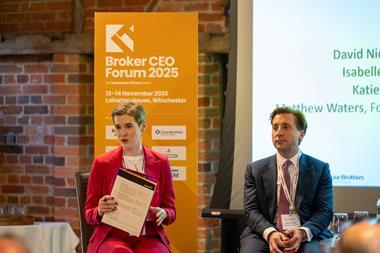
Read: Broker CEO Forum – Industry must make talent development ‘strategic and intentional’
Explore more talent related content here, or discover more news here
Where is the industry making progress?
It is not all doom and gloom, however. There are some areas where UKGI has made great strides in embracing fresh talent. This includes:
1. Early talent engagement
More firms are engaging with schools, colleges and universities, offering apprenticeships as credible alternatives to traditional degrees.
Like many brokers and insurers, The Clear Group runs an apprentice programme every year to help create clear pathways for school leavers into insurance careers. We also run an early careers programme and management development programme. Insurers also offer places on their development programmes to our apprentices – these are always extremely well received.
2. Skills-based hiring
As the technology and capabilities needed to develop business models evolve at an increasingly rapid pace, insurance businesses are shifting from more traditional recruitment pools to skills-based recruitment.
This approach opens doors to candidates from adjacent industries, such as fintech, broadening the talent pipeline beyond traditional insurance backgrounds.
3. Employer value proposition
Companies are strengthening their value proposition by highlighting flexibility, diversity and purpose. For example, insurer Ecclesiastical operates a unique model where profits are donated to charity and good causes.
More broadly, insurance empowers companies to innovate by managing downside risk. When communicated effectively, these narratives resonate strongly with younger professionals seeking impact.
4. Smarter use of social media
In August 2024, the underwriting group within the Chartered Insurance Institute’s (CII) New Generation programme identified that social media platforms like TikTok are surprisingly effective for engaging Gen Z talent with professional prospects.
Short form content showcasing career opportunities and lifestyle benefits enjoyed by our sector can help shift perceptions among young audiences that increasingly depend on social media platforms when digesting information.
5. Flexible work and wellbeing
Hybrid working models have become standard, expanding the talent pool geographically and appealing to candidates who prioritise work-life balance.
Enhanced benefits packages, including wellbeing support and private health insurance, are becoming standard as firms compete for talent.
Read: Reject applicants the right way to stop ‘switching people off what is a really attractive industry’
Read: Futureproofing talent starts with tackling retention
Explore more talent related content here, or discover more news here
What could the industry do better?
While positive steps are being taken to address UKGI’s talent struggles, significant challenges remain. These include:
- The creation of a unified industry approach
Centralised efforts around talent strategies are improving – but are currently still fragmented.
The CII and London Market Group have run initiatives such as ‘Insurance Influencer’ and ‘Futures Academy’, while individual firms run similar excellent talent linked programmes.
A coordinated, industry-wide campaign – such as Insurance Times’ Destination Insurance initiative – could significantly amplify UKGI’s visibility and appeal.
- Modernising assessment methods
Traditional recruitment practices often disadvantage those from non-traditional backgrounds. Updating talent assessment models to focus on skills and potential would improve inclusivity and tap into underutilised or wider talent pools.
- Clear career pathways
A major career barrier for young professionals is the lack of visible progression routes. Firms need to showcase transparent growth paths and opportunities for continuous learning if they want to attract and retain talent.
One way to do this is through paid training programmes in emerging fields like AI and data analytics. These schemes are particularly attractive and can help boost technology adoption in more traditional businesses.
- Employer branding beyond pay
Salary alone will not solve the talent crisis in our industry.
Numerous research projects show that culture, values and inclusion matter just as much to potential candidates as brand prestige or pay.
Businesses must invest in authentic storytelling and employee advocacy to differentiate themselves.
- Elevating the tech and innovation narrative
The UKGI industry needs to better communicate its technological evolution. Digitisation, data analytics and AI driven propositions are transforming insurance, yet these innovations are rarely highlighted in recruitment campaigns.
Positioning insurance as a tech enabled, future focused sector could help attract more talent from science, technology, engineering and mathematics (Stem) fields.
Read: Ela Metalia – Inside the IUA’s bid to bridging generations and next gen engagement
Explore more talent related content here, or discover more news here
Creating a ‘first choice’ narrative
My son and his friends are primarily undertaking stem-based degrees. The fact that, as a group, they had not even considered insurance as a target career market indicates that we have a lot more work to do.
The adage ‘I fell into insurance’ is still often used and is something we as an industry need to fix.
While good progress is being made by many companies to modernise the industry’s reputation as a career destination, there still seems to be some way to go before UKGI achieves the recognition it deserves.
If we continue to build on the progress already underway and strengthen our narrative, pathways, and outreach, we can ensure that the UKGI industry becomes a first choice career for the next generation of leaders.

Before entering the insurance world, Edgeley spent 17 years in the military. Following that, he was chief operations officer and managing director at A-Plan, managing director at Capita and held various leadership roles at BGL Group prior to joining Clear Group.View full Profile



Hosted by comedian and actor Tom Allen, 34 Gold, 23 Silver and 22 Bronze awards were handed out across an amazing 34 categories recognising brilliance and innovation right across the breadth of UK general insurance.
























No comments yet