

























Industry concerns from yesteryear come to fruition as the House of Lords pokes holes in FCA’s customer-centric rules for the home and travel insurance markets
Amid the craziness of the Covid-19 pandemic in 2020 and 2021, the FCA ladled an additional scoop of transformative change into the world of UK general insurance (UKGI) by introducing its fair value ethos for the home and motor insurance markets, seeking to level the premium playing field by eliminating the practice of price walking, among other adjacent measures.
The consensus from UKGI at this time was an appreciation of the positive goal the FCA was trying to achieve, while also acknowledging the vast volume of internal work and new product design such a regulatory pivot would cause.

However, a common niggle and source of trepidation expressed by the industry was the lack of granular, hard and fast actions. The FCA had clearly outlined the problem it wanted to solve and the results it hoped the fair value principles would demonstrate – but it did not actually tell firms how to implement fair value in their businesses, leaving a vital link in the chain open to interpretation.
This yawning gap in bringing fair value to life – which in part was bridged by 2023’s outcomes-centric Consumer Duty regulation – has finally caught up with the FCA, as the government’s Financial Services Regulation Committee decreed on 23 October 2026 that there is more for the regulator to do.
Following an inquiry between May and October 2026 focused on the home and travel insurance markets, the committee’s final report was scathing about the muddy metrics attempting to showcase regulatory success.
Talking about fair value, pricing principles and Consumer Duty, the committee questioned why greater “market-wide change” had not yet been evidenced after the slew of new rules in recent years, commenting that there was a lot of focus on monitoring customer outcomes instead of really enacting positive change.
It therefore urged the FCA to “strengthen the implementation, supervision and enforcement of Consumer Duty” in the home and travel insurance sectors, supported by a transparent roadmap for delivery timetables and greater clarity on expectations.
“Without clearer measures of success, it is difficult for firms, consumers and parliament to assess whether Consumer Duty is delivering its intended outcomes,” the committee stated.
Branko Bjelobaba, principal at Branko, strongly agreed with the committee. He told me: “The current data used to assess fair value is meaningless and a waste of time, especially as there is no need to present it to consumers to aid their decision-making process.
“Brokers lose the will to live completing pages of turgid data and then don’t even get to use any of that once the insurer has concluded their product does indeed provide the nirvana of fair value.
Read: House of Lords tells FCA to ‘accelerate’ work on home and travel as timescales ‘not clear’
Read: FCA plans to be ‘agentic’ regulator and shift to AI supervision
Explore more regulation related articles here, or discover more news here
“Can’t the industry agree [on] simple, easily comparable [and] meaningful metrics that show people that the product is of high quality, does work and does provide fair value?”
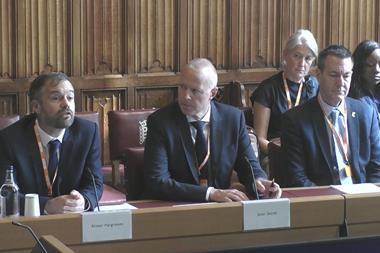
Insurance DataLab co-founder Matt Scott, meanwhile, was one of our market’s commentators that gave oral evidence in parliament to the committee. He told me: “Firms have invested considerable time and resources in measuring and monitoring performance – and customers should be seeing the benefits of that work.
“Clearer definitions and reporting requirements would support more meaningful comparisons, while additional measures, such as the time taken to settle claims and brand level reporting, could provide a fuller picture of customers’ experiences.
“The FCA should work closely with insurers, brokers, consumer groups, data specialists and other stakeholders to build a practical, consistent framework for comparing customer outcomes.”
The government’s committee has outlined an extensive to do list for FCA, which – at the time of writing – had yet to respond. The regulator cannot afford to bury its head in the sand here as Westminster seeks to hold it to account over customer outcome rules.
Will the FCA deliver? I reckon UKGI will have a wait on its hands in order to find out.

Since joining Insurance Times, Katie has successfully obtained a number of industry accolades. At trade body Biba's 2025 Journalist and Media Awards, for example, Katie was named the overall winner and received the Journalist of the Year trophy, alongside the Best Thought Leadership Award for her briefing article on reproductive health MGA Juniper and how insurance can be used to positively impact taboo subjects.View full Profile































No comments yet