



























Veterinary fees have risen sharply in recent years and have become unpredictable for the insurance industry
It is every pet owner’s worst nightmare when something happens to their furry friend – and this is what my parents had to deal with a few weeks ago.

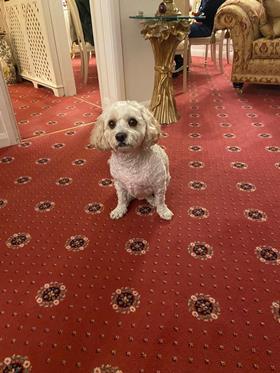
My parents own a cavapoo called Logan – a happy, healthy and playful dog. However, earlier in May 2026, it became apparent that he was struggling to walk, prompting an emergency visit to the vet.
The vet diagnosed Logan with a disk fracture, causing nerve damage. This meant he had to promptly have a spinal operation and was kept in the veterinary hospital for a few nights.
Thankfully, Logan is now on the mend. The veterinary surgeons did a great job and while it is going to be a long road for our family pet to get back to normal, he is working very hard with my parents on recovering from the injury and surgery.
In terms of the cost, this ordeal was not cheap. The initial visit to the vet to identify the problem and have injections was nearly £300, while the operation cost over £6,000.
The cost of the operation is being sorted out between the vet and my parents’ insurer. My folks additionally submitted a claim to their pet insurer to cover the cost of their initial visit to the vet.
Claims experiences
Ahead of writing this article, my dad told me that his claim experience in this instance was very good, receiving a payout on the same day that he submitted the claim.
However, this is not a uniform situation across the UK, with market research ringfencing the country as the least satisfied place in Europe with regards to the claims process for pet insurance.
According to software firm Guidewire’s latest European Insurance Consumer Survey, released 20 May 2026, the UK satisfaction rate for pet insurance claims was 59% – some 17% lower than the highest rate set by France (76%).
This survey also showed that 70% of German respondents and 64% of Spanish consumers reported overall claims satisfaction linked to pet insurance policies.
Sebastia Company Mas, product marketing manager at Guidewire, noted this was because the UK “is a highly mature and competitive market operating under significant cost pressure”, with veterinary fees rising sharply in recent years and becoming unpredictable for the insurance industry to price.
Indeed, in the Competition and Markets Authority (CMA) market investigation into veterinary services for household pets, released 15 October 2025, it was revealed that veterinary fees had increased by 63% between 2016 and 2023 across the entire market.
The investigation also found that some veterinary practices were charging as much as £30 for written prescriptions.
Shock charges
These types of charges have affected my parents.
Logan suffers from the occasional ear infection, so when one happened again recently, my mum called the vet and asked if she could buy a new bottle of ear drops.
Read: Will the CMA cap for UK vet prescription fees fix the ‘broken’ pet insurance market?
Read: UK lags behind Europe on pet insurance claims satisfaction
Explore more regulation related content here, or discover other news analysis stories here
The vet put one aside and when my parents went in-person to buy the drops, it cost £73 – more than we expected. So, my parents went home to get more money, but had a look online and found they could buy the same bottle from a registered pet chemist for £25 plus £4 postage – £29 in total.
However, they needed to upload a prescription to buy the bottle via the internet. They went back to the vet and asked how much it would cost to have a new one written up – the cost was £35.
This meant the cost online was now suddenly £64. And to avoid going through the administrative hassle of the online purchase, they just decided to buy the bottle there and then at the vet’s surgery for £73.

Logan at home
Given these types of problems are national, it is no surprise that Insurance DataLab noted in its analysis of Financial Ombudsman Service (FOS) data, published 19 March 2026, that “pet insurance has also attracted significant attention regarding customer complaints, with rising veterinary costs and increasingly complex policy structures often cited as contributing factors behind disputes in the market”.
Imperative reforms
The CMA is introducing regulatory reforms impacting the pet insurance market that will come into force later this year.
Measures include a cap of £21 on written prescription fees from vets for the first medicine and then £12.50 for any additional medicines, as well as a dedicated price comparison website to help boost competition and drive down prices faced by consumers.
This will be a welcome change for the insurance industry, given it could improve the prediction of claims costs and make it easier for insurers to price competitively because they will have access to better data.
Henri Dowling, chief executive at pet insurer Waggel, said: ”The current system is not working for anyone – vets are criticised for unexpected fees, [while] wildly different pricing between practices makes it hard for insurers to price their products fairly and consumers are at the sharp end with surprise costs and higher premiums as a result.
”The cap, together with greater transparency on pricing, will level the playing field and give some power back to [pet] owners, as well as making it easier for insurers to price competitively.
“In the short term, everyone should benefit from the cap and its accompanying measures, bringing much needed stability and transparency to vets fees.”
After this month’s experiences, the Cowen family are certainly pleased to see the CMA’s planned changes for the pet insurance market.
With pets so often a valued member of families, putting prices against helping four-legged loved ones stay healthy and well is an emotive and sensitive subject. While appreciating that services come with costs, the CMA’s work to “level the playing field” and nurture stability in fair pricing is most welcome.

His career began in 2019, when he joined a local north London newspaper after graduating from the University of Sheffield with a first-class honours degree in journalism.
He took up the position of deputy news editor at Insurance Times in March 2023, before being promoted to his current role in May 2024.View full Profile






























No comments yet