
























The latest SR:500 Exchange virtual roundtable, hosted by sister publication Strategic Risk, brought together risk professionals, brokers and academics to discuss risk management’s moving goalposts amid geopolitical fluctuations
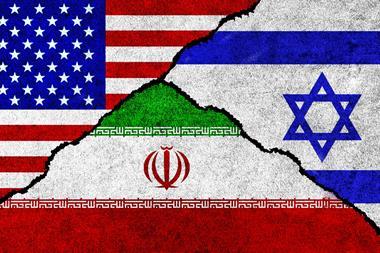
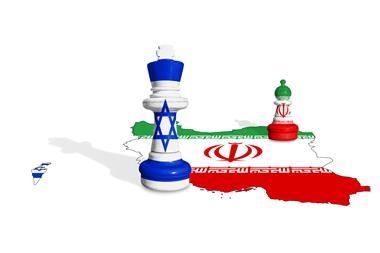
Today’s risk management professionals are grappling with “a huge risk management gap” as the ripple effects from back-to-back geopolitical tensions – such as the ongoing conflict in the Middle East between the US, Iran and Israel since February 2026 – causes insurance rates and availability to fluctuate and drives risk managers to adopt a “different mindset”.

This was the consensus reached during Strategic Risk’s latest SR:500 Exchange roundtable, held virtually on 28 April 2026 and attended by risk management professionals, brokers and academics. Strategic Risk is Insurance Times’ sister title, targeted at the global risk management community.
The hour-long session delved into the interplay between insurance and risk management as geopolitical uncertainty becomes evermore certain, impacting risk transfer prices and capacity, the desire for captive programmes and proactive versus reactive risk management strategies.
The roundtable title was ‘Aligning risk and insurance amid geopolitical disruption: How risk managers and brokers view underinsurance and protection gaps’.
Setting the scene for this conversation was Vibhuti Bhushan, who is responsible for governance and sustainability at Rak Ceramics – a global ceramics and gres porcelain manufacturer headquartered in the United Arab Emirates’ (UAE) Ras Al Khaimah, with additional operating sites in India and Bangladesh. The business exports to around 150 countries, as well as imports the majority of its raw materials.
For Bhushan, the disorder in the Middle East has caused a range of “first order consequences” from a risk transfer and management perspective – such as sky-high costs for cargo and marine policies linked to the closure of the Strait of Hormuz.
This has proved such a chokepoint that numerous news outlets on 18 May 2026 reported that the Iranian government has allegedly launched a Bitcoin-backed insurance service, called Hormuz Safe, for shipping companies that want to transit the waterway.
However, Bhushan added that “second [and] third order consequences are also coming into play” now, with insurance rates escalating across the board. In a fictional example, he said that coverage might have previously cost “$100 (£74) per unit” – but that now prices were more likely to be nearer $125 (£93) to $150 (£111) per unit, impacting firms’ “cost structures”.
Furthermore, the risk of underinsurance is more prevalent today because “insurers are still writing [insurance policies] in terms of the declared values on what the historical value patterns have been – whereas the reality has changed”.
Arjun Manoharan, a committee member for UAE’s Institute of Risk Management (IRM) and commercial manager at broker Shory Insurance, confirmed that over the past three to five years “no property is not underinsured”.
He ringfenced this as a clear opportunity for risk managers “to actually look at the values [of] what they [are] insuring [and] whether they are right or wrong” because many of the insured values in place today mirror the prices set back in 2022 or 2023.
Jennifer Thamm, chairperson at Switzerland’s IRM and chief executive at SaysLife, a risk management tool for workplace wellbeing, added that although protection gaps and underinsurance are now big talking points thanks to evolving geopolitical situations, the forerunner of this is “a huge risk management gap”.
She continued: “You have to be able to say ‘how do we manage it going forward and make sure that in the best case scenarios and the worst case scenarios that companies and people are not adversely affected?’”
Is the UAE underprepared?
For Manoharan, the geopolitical landscape today – and particularly the conflict in the Middle East – has unlocked a “different mindset” in the risk managers based in the UAE.
Read: Briefing – Shockwaves will be felt in London as missiles fly in the Persian Gulf
Read: Could travel disruption arising from the Middle East conflict trigger a rise in opportunistic fraud?
Explore more risk management related content here, or discover more news analysis here
He told attendees that, in his experience, covers such as political violence, terrorism and strikes, riots and civil commotion (SRCC) had not been discussed in business boardrooms for the last 10 to 15 years in relation to property programmes. He added that even on “a general property insurance” policy for an UAE business, the protection was “not all risk cover”.
Although international companies headquartered outside of the UAE typically hold a global policy that can protect its UAE situated operation, Manoharan noted that “UAE-based companies hardly [think] about terrorism insurance or political violence”.
He continued: “[The Middle East conflict] has opened a different mindset for risk managers. It’s not the old school way of doing risk management, but now we are basically pushed to think about it and talk about it.
“[Following the onset of the conflict], the amount of clients calling us each day increased and the values they [were] ready to pay was massive. The insurance rates were getting high, but [some] companies [were] ready to take that extra coverage because no one knew what was happening.
“On the other [hand], there [were] companies ready to absorb this risk, but they were just waiting [to find out] how things were moving. So, every day they want to check the prices. They [thought] it [would] fluctuate when the two weeks ceasefire came [in April 2026]. They thought the rates [would] go down and then they [could] buy [an] insurance policy.
“And there are some [companies] asking us whether they [should get] a short-term cover for three months or six months or one year.”
Silver lining opportunities
Despite the myriad challenges and considerations outlined by virtual roundtable attendees around conflict linked protection gaps, the group confirmed that there is still a silver lining to current risk conditions.
Risk management researcher and practitioner Sonjai Kumar, for example, cited that since 2021, “conflict is continuously going on” – for example, 2022’s Russia-Ukraine fracas – meaning that risk professionals now, unfortunately, have experience of working and dealing with these environments.
“This [current] war situation, though it has been precipitated, [it is] not new. In the last four or five years, [war] has been going on,” he explained.
Meanwhile, Reto Brosi, managing director at Switzerland-based consultancy Megrow Consulting GmbH, emphasised that he remained “positive, acknowledging all the current headaches”, because risk professionals have “solutions” to utilise and past “success cases” to pull upon.
As an example, he referenced a situation from the motor insurance market 20 to 30 years ago, when cover for young drivers with high powered vehicles was non-existent. This slowly changed, even if policies initially had exclusions, limitations and expensive premiums.
A more recent example he had seen concerned insurers pulling out of providing natural catastrophe cover in US states Florida and California due to the volume of these types of disasters. But he noted that – to the best of his knowledge – one insurer had opted to stay in this market, which kept him “optimistic”.
Brosi therefore advised his peers to think short and long-term.
He said: “We do have two angles to this. One [is] short-term problems. Here, risk management must come in with proposals and solutions [for the] short term. I know sometimes [this is] a bit difficult, but we have plenty of cases where these things have worked [in] close collaboration with brokers, providers, sometimes even with regulators. Call it fix a burning house or panic mode.
“The other one is – pick cyber or climate change or whatever else – where the industry is maybe still debating as to what extent is it insurable. And there we also have solutions, but they do take take time and it’s then often a multiparty type of solution.”
Read: Beazley to launch marine war consortium in response to Strait of Hormuz situation
Read: Briefing – What does the Q1 2026 Middle East conflict mean for travel insurance?
Explore more risk management related content here, or discover more news analysis here
Kumar additionally reminded roundtable participants that insurance was also just one string in a risk manager’s bow and that there was always the option to retain a risk internally – for example, through a captive arrangement, where an organisation creates a subsidiary to insure its own risks.
He advocated for a “multiple strategy of managing risk, rather than solely depending upon insurance companies” – especially “in a turbulent time like this because such time does not remain always like this”.
‘Repositioning’ the role of risk managers
For Brosi, the onslaught of geopolitical tensions that have now become commonplace globally present “a massive opportunity” for risk professionals to “reposition” themselves – moving from a black and white “governance type of risk management” to instead morph into “a more strategic advisor” for their businesses.
He continued: “We don’t need to go to our boards and tell them five times a week that the world is ending. That’s not how you advise. But conversations about scenarios, how to deal with them – that’s ultimately how we will prove our worth, much more than filling up spreadsheets and doing compliance.
“Stress and scenario testing is a very good tool when you not only create scenarios, but you also create the stresses to identify what would be the maximum possible loss.”
Bhushan agreed: “For this aspect of risk management to become more proactive, rather than being reactive, what is most important is that your board gets involved in that conversation. There’s no profit in panic mongering. As simple as that. You’re looking at informed conversations.”

Since joining Insurance Times, Katie has successfully obtained a number of industry accolades. Most recently, at Biba's 2025 Journalist and Media Awards, Katie was named the overall winner and received the Journalist of the Year trophy, alongside the Best Thought Leadership Award for her briefing article on reproductive health MGA Juniper and how insurance can be used to positively impact taboo subjects.View full Profile

























No comments yet