


















’Our job is to deal with the market that’s in front of us, not the market we’d like to be in front of us,’ says chief underwriting officer
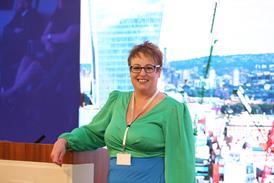
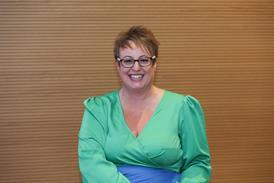
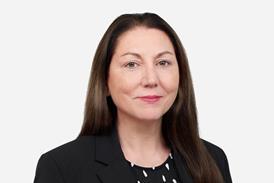
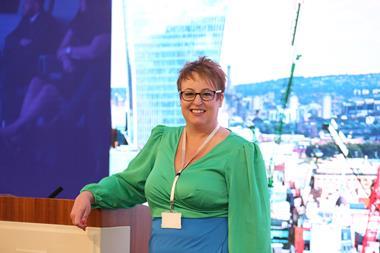
Hiscox group chief underwriting officer Jo Musselle has spent 24 years at the insurer across a range of roles, joining the then-tiny Hiscox Retail business as professions and commercial underwriting manager in 2002, before rising to run the UK claims team for six years, serve a stint as the UK chief executive and eventually take up her current role, which she began in 2020.
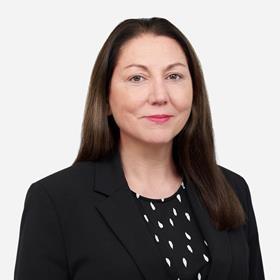
“I’m a significantly better underwriter because of the time I spent in all parts of the company,” she says.
“Claims is what we sell. It’s the promise. It’s our chance to deliver on that promise – and firsthand experience in that makes me a far more well-rounded underwriter.”
That experience of claims is vital to how Musselle thinks about underwriting as a discipline and filters through to Hiscox’s whole end-to-end approach, which is bearing fruit.
In its latest full year results for the 12 months ended December 2025, the specialist insurer posted insurance contract written premiums of $4.97bn and, evidencing a successful approach to underwriting, a combined operating ratio of 87.8%
And while this result reflects careful risk selection and pricing, she explains, underwriting leadership is about far more than this.
“It’s underwriting, risk selection, pricing, reinsurance buying, exposure management, all the way through to claims management,” she says.
“If you’re only focused on risk picking, you’re not building that holistic end-to-end expertise, which for a specialty underwriter is really critical.”
The dual engine
Musselle and Hiscox’s shared holistic view of responsible underwriting shapes a strategy built around what she calls a “dual engine” designed to perform throughout market cycles.
Read: Gareth Hemming – Hiscox carrying ‘positive momentum’ on broker sentiment into 2025
Read: Jon Dye – Hiscox’s broker partners ‘absolutely front and centre’ to growth ambitions
Explore more insurer-related content here, or discover other interview stories here
The Hiscox retail business, which focuses on SME commercial customers and high net worth clients, aims to “compound and grow through the cycle” while providing “diversification and balance to some of our bigger ticket business” in the London market and reinsurance, where Hiscox aims at cycle-dependent discipline – ”leaning in” when conditions are attractive or “shrinking” when they are not.
“Our job is to deal with the market that’s in front of us, not the market we’d like to be in front of us,” Musselle says.
And while it is a misnomer to talk of whole market softening or hardening, Musselle acknowledges that big ticket businesses rates have been softening since 2025, with that trend having continued into 2026.
However, she says that her focus remains on rate adequacy rather than rate direction – and when the price is no longer right, Hiscox reacts.
“We are a disciplined underwriter,” she says. “Whether that means managing line size, trimming the deciles of a portfolio or shrinking, we react accordingly.”
That discipline, Musselle explains, is underpinned by a data monitoring process that spans more than 250 data points across 16 lines of business in four London market divisions. Some metrics are quantitative, while others are more qualitative and forward-looking, including reads on market sentiment.
And, through this constant monitoring, Musselle says Hiscox is able to pursue a strategy of “constant course correction”, rather than reacting when it is too late.
“We’re constantly monitoring, constantly taking action and then constantly asking whether that action worked and whether we need to do more or less,” she explains.
Seeing around corners
Making sure to effectively monitor the market is one thing, but anticipating where it is going is another.
It is this arena that Musselle is most committed to for Hiscox’s underwriting future. Her goal, she says, is to eventually leave her role with the business in a more future-focused state than she found it – and a significant portion of that means preparing the insurer’s underwriters for a profession that she predicts will look very different within a decade.
“The underwriter of the future is going to be really different to the underwriter of today, which is already very different to the underwriter of ten years ago,” she says.
“We’ve all got to learn to see around corners – for emerging risk, for what the skills of the future look like and for how the role itself is going to change.”
Data fluency is central here and Musselle has built out training programmes across the underwriting function. Where artificial intelligence is concerned, she sees it as a tool for augmenting this fluency, rather than as something to be feared as a potential replacement for the underwriter’s skill set.
“We want our underwriters to utilise AI to do the things that don’t add value – the simple and the straightforward tasks,” she says.
“What that really does is free them up to do what they do best – think about the risks our customers are going to face in the future, for which there are no products that exist today.”
Augmented underwriting
This future-focused orientation runs through Hiscox’s approach to technology investment more broadly, too.
Musselle describes three objectives against which any technology deployment is measured at Hiscox. Making the business easier to work with, enabling better and more informed underwriting decisions and driving operational efficiency.
On making the business easier to work with, she points to automated submission ingestion in the London market, where updates from last year mean AI is now turning around terrorism quotes in minutes rather than the days it used to take.
On enabling smarter underwriting, Musselle identifies recent partnerships with specialist data providers, such as Bellwether for wildfire risk mapping, which are improving risk selection in areas where exposure is notoriously difficult to model.
And, on operational efficiency, enhanced eTrading processes are increasingly stripping out cost and friction, allowing Hiscox to serve micro commercial customers profitably at scale.
“If we can automate the smaller, more straightforward risks, it frees up our underwriters to be creative,” she says.
“We talk about augmented underwriters, not replacing them.”

With a particular interest in regulation, technology, innovation and political stories, he has covered issues from the multioccupancy buildings scandal to the insurance implications of quantum computing and the growth of new markets.View full Profile
























No comments yet