











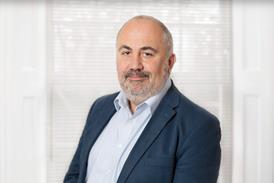









‘People always ask us if there’s a secret recipe, but there really isn’t. It’s a mindset and a culture and it’s about not breaking that,’ says chief executive
Motor specialist Sabre Insurance is far from the biggest insurer in the UK market, but it consistently puts up impressive profitability and market leading combined operating ratios (COR) – even when the motor market gets tough.
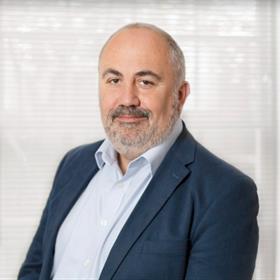
In its most recent financial results for the 12 months ending 31 December 2025, the insurer posted a profit increase of 4.9% despite a 14.2% fall in gross written premium (GWP), bringing its COR down to 82.3% in a year when professional services firm EY said the market averaged a break-even figure of 101%.
And, nearly 40 years into a career in insurance, chief executive Geoff Carter has a simple answer for why Sabre Insurance consistently outperforms the market in terms of profitability – it does one thing and does it very well.
“There’s a brilliant article I was given when I first started,” says Carter, who has been chief executive at the £400m market capitalisation insurer since being promoted in 2017, having joined as chief operating officer in 2015 from Tesco Underwriting, where he was chief executive.
“It’s about [Robert] Scott not winning the race to the Antarctic [in 1911]. He had all the equipment and all the money, but [Norwegian explorer Roald] Amundsen just had some huskies with a sled – and he’d learned how to use them perfectly.
“He didn’t need to be the biggest or the most expensive. He just needed to be really good at one thing.”
This philosophy – and the visual metaphor of a sleek, well organised husky sled – has become an internal manifesto at Sabre Insurance and Carter even has it sent to new board members when they join.
Margin call
With Sabre Insurance so focused on the motor market, Carter says that the firm has “nowhere to hide” on pricing, unlike larger insurers that are able to eat losses in the market by supplementing with other lines’ profits.
Read: Smaller insurers may ‘exit’ motor sector if market falls into red
Read: In Focus: How are motor insurers tackling 2026 as market predicted to fall into red?
Explore more motor related content here, or discover other interviews here
What this does, he adds, is focus minds on making sure that underwriting is profitable across market cycles – a “consistent part of Sabre’s DNA that says always go for margin first and if you can take volume, then great, but margin first”.
The insurer primarily plays at the two extremities of the motor market, with an appetite to underwrite customer segments such as wealthy people’s vehicles in central London on the one hand and those in less affluent or higher risk postcodes on the other.
Crucially, this “barbell” approach to underwriting treats both segments the same way and aims for 25% margin across all risks.
Carter takes no credit for the development of this approach to underwriting or Sabre’s philosophy, however, instead attributing it to founders Keith Morris and Angus Ball.
Part of what drew Carter to Sabre Insurance when he was offered the role was its mystery.
He explains: “No one ever really knew how Sabre managed to be successful. It was too tempting to turn down the chance to come and understand how it works. When I first joined, [Morris and Ball] essentially told me to go sit in a corner and not touch anything for six months.
”People always ask us if there’s a secret recipe, but there really isn’t. It’s a mindset and a culture and it’s about not breaking that.”
This culture is reinforced by a relatively flat managerial structure and a lean team, with Carter explaining that the entire executive team sits within a minute’s walk of each other.
Data matters
The other pillar of Sabre Insurance’s strategy is its data, sourced from long-standing underwriting experience in the markets that it underwrites.
Carter explains: ”Other people look at our 20% margin and think ‘well we’ll do it at 12%, go into the market and clean up’. What they have tended to find is it’s not that straightforward without the data we have.”
And, with this advantage, Sabre Insurance is able to move nimbly in the pricing arena. During the Covid-19 pandemic from 2020, the firm had to move backwards in terms of volume to maintain its margin and, when it announced its H2 2022 financial results alongside a decision to increase pricing in response to anticipated claims inflation, its share price crashed by around 35% in a single day.
“That was pretty hideous,” Carter admits. “But we were confident we were right.” The call had come from Sabre Insurance’s claims director and chief actuary, who had seen the data and been backed by Carter following a conversation.
He adds: ”It took everyone else a year or two to catch up but, by then, our results remained stable while the rest of the motor market’s plummeted.”
Carter admits that Sabre Insurance is not large enough to be a market mover with its pricing calls, but adds that the motor market now sees the firm as something of a “canary in the coal mine” for pricing decisions.
And, on where the motor market will go next, he says: ”In this market you either have to be big with economies of scale, or be a specialist with non-standard, high premium business.
“I’d be concerned if I was in the middle of that as a slightly subscale competitor to firms like Hastings, Aviva or Ageas, so I’m interested to see what happens with the squeezed middle.”
Where Sabre Insurance is concerned, however, the strategy remains largely the same – continuing to chase margin and taking volume where it can.
Carter also indicates that Sabre Insurance is exploring expanding its product areas to “adjacent growth opportunities”, such as small motor fleet, while also supplementing its existing books of taxi and motorcycle business.
And, amid any changes, “the same DNA will run through it,” he says.
“We’re always thinking about where the next logical places to go are.”

With a particular interest in regulation, technology, innovation and political stories, he has covered issues from the multioccupancy buildings scandal to the insurance implications of quantum computing and the growth of new markets.View full Profile


























No comments yet