




















The removal of mandatory third-party liability insurance for exempted banned dogs has closed one regulatory loophole – but it has also exposed a wider question for insurers. As the market retreats from high-risk breeds, who ultimately bears the financial cost when serious attacks occur?
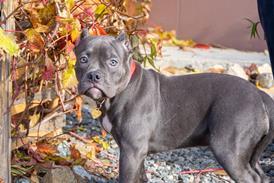
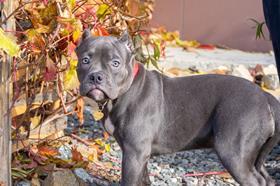
Since February 2024 and the Dangerous Dogs Act, it has been a criminal offence for owners of certain banned dog breeds, including XL Bullies, to continue owning their animals without a certificate of exemption.
And, importantly, the owners of these government registered animals – known as exempted banned dogs – were required to hold third-party liability insurance as a legal condition of keeping them.
But that requirement quietly disappeared this week on 1 July when the only provider of suitable insurance cover withdrew from the market, leaving the government with little choice but to remove the legal obligation altogether.
The government’s decision solved one problem immediately by removing the expectation that owners purchase a product which no longer exists.
But this decision, which the government was forced into by the market, has also raised a more fundamental question for the insurance industry.
If owners are no longer required, or able, to buy liability cover, where does the financial burden fall when a serious attack occurs?
The legal position remains unchanged. Owners remain liable for any damage caused by their dogs and can still face civil claims or court-ordered compensation.
De facto, however, obtaining compensation from an uninsured individual is often far easier said than done.
For an industry built around transferring risk away from individuals, the disappearance of cover for one of the highest-profile risks in pet insurance presents an uncomfortable contradiction.
The issue is not simply whether insurers should cover banned breeds. Rather, it is whether the combination of limited market appetite and changing regulation has created a protection gap that leaves victims, owners and ultimately the wider public, exposed.
Market failure or policy decision?
The Department for Environment, Food and Rural Affairs (Defra) stated that the change in requirements was driven by market conditions, rather than government policy.
Read: Lloyd’s boss Tiernan predicts ‘explosive’ growth in geopolitical risk insurance demand
Read: UK heatwave raises employer liability risks, lawyers warn
Explore more risk management related content here, or discover more news here
A department spokesperson said: “Insurance companies have decided to withdraw suitable third-party public liability cover for exempted dogs. As a result, the requirement to hold this insurance has been removed.
“All other legal requirements remain in place, including the obligation for exempted dogs to be muzzled and kept on a lead in public places. Owners remain fully responsible for any harm caused by their dogs.”
Behind this statement lies an unusual situation.
Rather than the government deciding that insurance was unnecessary, the market effectively determined that suitable products could no longer be offered commercially. Ministers subsequently removed the requirement because compliance had become impossible.
The background provided by Defra suggests officials explored alternatives with insurers, Dogs Trust and devolved governments, but “no provider was willing to cover banned breed dogs at this time”.
That leaves liability sitting where it always legally has – with owners themselves. But whether that provides sufficient financial protection is another matter.
Why insurers stepped back
For insurers, the withdrawal of this requirement reflects commercial reality, rather than a lack of willingness to protect customers.
Justin Clarke, chief underwriting officer at ManyPets, argued that liability insurance remains an important component of pet cover.
He explained: “Third-party liability cover is something we feel strongly about and it’s included as standard across most ManyPets policies, up to £2 million annually.
”We’d always encourage dog owners to check that any policy they hold includes this protection, because the financial consequences of a serious incident without it can be significant, both for the victim and the owner.”
However, that commitment does not extend to banned breeds.
ManyPets currently excludes dogs on the Dangerous Dogs list, as well as a small number of breeds it considers close to that threshold, reflecting what it described as a common position across the market.
The reasons for that decision are rooted in underwriting performance.
Clarke added: “On the underwriting side, liability cover for dogs does carry complexity. Breed, behaviour history, environment and owner experience all influence risk in ways that are harder to standardise than, say, vet fee cover.
“As a result, isolated third-party liability cover is a difficult and volatile product for an insurance company to offer on its own.
“But difficulty is not the same as impossibility and we don’t think that complexity is a reason to leave owners and victims without cover.”
ManyPets added that before XL Bullies were added to the Dangerous Dogs Act, the breed generated the highest volume of liability claims, making historic claims performance a key driver behind underwriting decisions.
The challenge, therefore, is not simply high severity, but whether sufficient premium can ever be collected from a relatively small customer base to offset potentially catastrophic losses.
The protection gap
Although liability claims have remained relatively stable, insurers acknowledge the absence of dedicated cover could have wider consequences.
Clarke said: “From what we’re seeing in our own claims data, we haven’t observed a notable shift in the frequency or severity of liability claims involving dogs. If liability cover is becoming less common across the market, or if owners are going uninsured altogether, there is a real risk that victims of serious dog attacks are left without a clear route to compensation. That’s a protection gap that should concern the whole industry.”
That observation cuts to the heart of the issue.
Insurance exists to ensure compensation can be paid regardless of an individual’s financial circumstances. When cover disappears, legal liability remains while practical recovery becomes significantly less certain.
Some claims may ultimately be met under household insurance policies where personal liability cover exists, but this is far from universal and policy wordings vary considerably.
ManyPets noted that the absence of dedicated liability cover could result in more disputes progressing through formal legal channels, increasing costs for all parties involved.
The industry, therefore, faces an unusual situation where an underlying exposure has not disappeared, but the mechanisms for funding it have become increasingly fragmented.
Health cover continues
The divergence between veterinary insurance and liability protection is perhaps best illustrated by Napo.
The insurer continues to offer health-only policies for exempted XL Bullies, having introduced cover in 2024.
It argued that excluding these breeds entirely would leave responsible owners unable to insure veterinary costs, whereas providing liability presents a very different underwriting challenge.
“We built a health-only product, so that owners of these breeds are not shut out of insurance that protects them against the cost of veterinary treatment,” Jean-Philippe Doumeng, chief executive and co-founder at Napo, told Insurance Times.
Doumeng stressed that public safety policy remains a matter for government, while its role is ensuring owners can access veterinary insurance where commercially viable.
That distinction highlights how insurers increasingly separate first-party health risks from potentially catastrophic third-party exposures.
For owners, however, it may not always be obvious that pet insurance and liability insurance are no longer synonymous.
Beyond the immediate
Elsewhere in the sector, there is little evidence that the rule change will affect business practices.
The Pet Industry Federation said it had not seen significant concerns emerging among members and added that guidance received from specialist broker Cliverton confirmed the removal of the legal requirement “does not, in itself, affect the business insurance cover they provide to pet professionals”.
Businesses have instead been advised to continue carrying out robust risk assessments and comply with their own policy conditions.
Meanwhile, Dogs Trust maintained that removing the legal requirement was the only practical outcome once cover disappeared.
The charity said: “We welcomed this decision, as it addressed a situation where responsible owners risked being unable to comply with the law because appropriate insurance products were no longer available.”
Yet, even if the immediate regulatory challenge has been solved, the broader insurance question remains unresolved.
Clarke said he believes insurers should remain engaged.
“We think insurers have a role to play here,” he said.
”Whether that means greater transparency about what policies do and don’t include, clearer industry guidance on minimum standards of liability cover or a broader conversation with government about where responsibility lies, the market shouldn’t step back from this issue.
”Dog ownership carries real responsibilities and insurance should reflect that.”
He also points to possible longer-term solutions, including an industry-wide mechanism similar to government-backed terrorism reinsurer Pool Re or other international models where governments support hard-to-insure risks.
Whether such ideas will gain traction remains uncertain.
For now, the market has reached an uneasy equilibrium. Owners remain legally responsible and insurers continue to insure most dogs while largely avoiding banned breeds, all while mandatory liability cover has disappeared because no insurer was prepared to provide it.
The commercial logic behind those decisions is understandable. As private, commercial entities insurers cannot be expected to underwrite risks that consistently lose them money.
But from a risk-transfer perspective, the outcome is less comfortable. The underlying exposure has not vanished simply because the desire to provide insurance has.
For an industry whose purpose is to prepare society for uncertain and potentially devastating events, the disappearance of liability cover for one of the highest-profile canine risks raises a difficult question.
If the market cannot insure the risk and the government cannot compel cover that does not exist, who ultimately pays when the next serious attack occurs?

With a background in local journalism, she has previously worked as a freelance reporter covering community stories and gaining valuable on the ground experience.View full Profile





























No comments yet